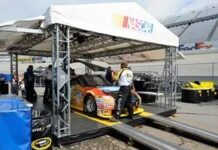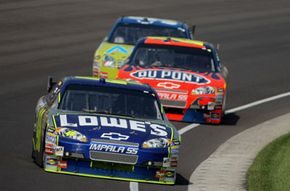
Gentlemen, start your engines.
For millions of fans, these four words were more than just a starting signal. These calls to action bring families together more than 36 times a year. The sounds of the engines of 43 stock cars roaring in unison is mesmerizing. It’s a sensory overload of noise and speed. You watch the colorful cars blur past. You watch the drivers play their personas. In the US, NASCAR dominates the sports world. It is the second most watched sporting event after the National Football League.
The sport is structured into three main categories. We have a line of Craftsman trucks. Next up is the Nationwide Series. Finally, there is the top-level Sprint Cup series.
Each department looks different. The vehicles are not the same. They don’t all behave the same way. A truck is not a stock car, and a stock car is not a cup car. But behind steel and fiberglass there are commonalities that cannot be ignored. All NASCAR vehicles must have Goodyear Racing Eagle tires.
The Exclusive Deal
Since 1997, Goodyear Tire & Rubber Company has had the exclusive right to supply tires to NASCAR’s three major divisions. All cars in the Sprint Cup series have the Goodyear Racing Eagles. You can see them in the cars of the Nationwide series. You’ll see them on Craftsman trucks from Daytona to Darlington.
The current exclusive agreement is valid until 2012.
NASCAR officials have made their position clear. They didn’t want another tire manufacturer entering the sport. They are not interested in opening the door. This is in stark contrast to F1, where currently two tire manufacturers can compete for teams.
Why the difference? Why does NASCAR stick with just one supplier?
The fear is simple. Officials were afraid to add another manufacturer because it could lead to a tire war.
Consider what happens when companies compete for advantages. They push boundaries. they cut corners. When it comes to motorsports, pushing the limits of tire technology has a dangerous downside. The worst case is when manufacturers make dangerous tires just to win the technical battle. They compromise safety for performance.
NASCAR wants to avoid this scenario altogether. They want consistency. They want control. They want to make sure the variable on the track is the driver, not the integrity of the rubber hitting the asphalt. Banning the tire war removed the pressure to innovate at the expense of safety. This is a business decision built into your security protocols.
Therefore, the rubber does not change. The deal holds. The war stays on the sidelines, where it belongs.
But will this monopoly stifle innovation or keep the car on track? The answer probably depends on which side of the finish line you are on.
Partnership behind Vamp
Goodyear’s relationship with NASCAR is more than just sponsorship. This is a deep technology partnership. Goodyear engineers worked in conjunction with the NASCAR development staff. We also coordinate directly with individual teams. The scale is huge. In a typical Sprint Cup Series weekend, teams burn more than 2,000 tires. This quantity requires precision. We need tire technology that can maintain top speed grip on the road relentlessly. To understand how this grip is achieved, you need to understand the design principles behind rubber. More specifically, it is the NASCAR Racing Tire Specification developed by Goodyear.
But before we delve into compound chemistry and tread patterns, there’s another big thing to consider. We’ve been following these matches for decades as they come.
Airship legacy
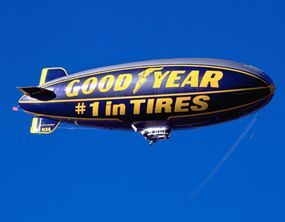
The Goodyear Airship is an icon. This is not just a marketing ploy. This is a machine built to last. Goodyear introduced its first airship in 1925. The goal is simple. It’s all about advertising in the US skies. The strategy worked. The brand has become synonymous with the sky itself.
The role of these airships evolved rapidly. During World War II, the US Navy took over. They used tanks filled with helium for surveillance. They found an enemy submarine in the Atlantic Ocean. This technique has proven to be reliable. This turned out to be very important.
More than 80 years later, airships are still flying. They are still being repaired. There are currently three airships in operation: Goodyear Spirit, Innovative Spirit and American Spirit. They surround sporting events across the country. They watch the races. They watched the tires wear. They watched history unfold.
What happens when the tire breaks at this pressure? Who decides which compounds are removed? The answer is buried in data logs and test tracks, far from the stadium lights. But the airship saw everything.