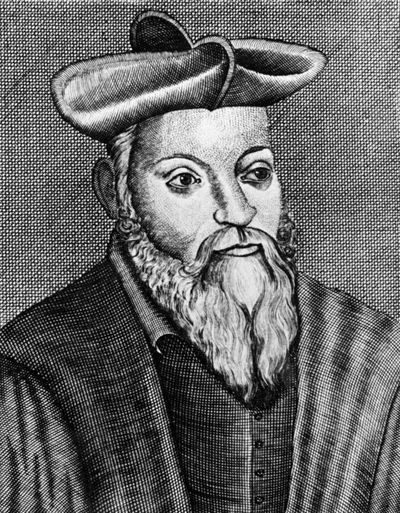
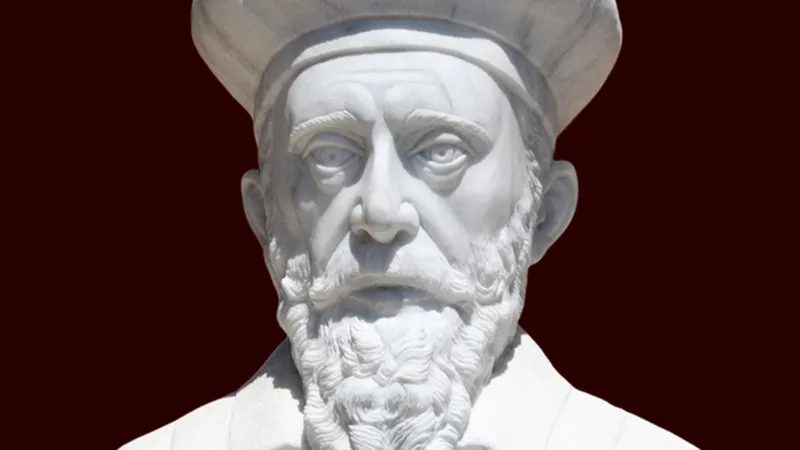
Michel de Nostredame, known to the world as Nostradamus, wasn’t just a mystic. He was a man of science in an age that didn’t always separate the two. Born in Saint-Rémy, France, on December 14, 1503, he lived through a turbulent Renaissance era before dying in Salon on July 1 or 2, 1566. Today, he remains the most widely read seer of his time, though his legacy is complicated by the very nature of his work.
A Doctor Who Read the Stars
To understand Nostradamus, you have to look at what he actually did. He was a physician. In the 1500s, medicine was still bound to astrology. Doctors didn’t just prescribe herbs; they calculated planetary positions to determine the best times for bloodletting or surgery. Nostradamus trained in this tradition. He studied at the University of Montpellier, where he earned a degree in medicine. This wasn’t just a hobby for him. It was his profession.
Yet, his name is tied to prophecy, not prescriptions. Why? Because he wrote Les Prophéties, a collection of haiku-like verses. These poems were vague, coded, and open to interpretation. That ambiguity is exactly what kept them alive for centuries. People wanted to know what would happen next. Nostradamus gave them something to search for.
The Myth vs. The Man
Most people know him as a fortune-teller. The reality was more grounded. He traveled extensively across France, treating plague victims. He saw suffering up close. His astrological charts were tools for diagnosis, not just prediction. When he started writing verses, he was likely using astrological frameworks to make sense of chaotic events.
The book itself was published in the 1550s. It contained hundreds of quatrains. None of them named specific people or clear dates. This lack of detail is what makes them so enduring. You can project any major historical event onto them. Did he predict the French Revolution? Some say yes. Did he foresee 9/11? Others claim he did. The verses are flexible enough to fit almost anything.
Why He Endures
Nostradamus’s fame didn’t come from accuracy. It came from obscurity. His language was deliberately obscure. He mixed Latin, Provençal, and Italian. He referenced mythological figures and obscure historical events. This forced readers to look deeper. To find meaning, you have to interpret. And in interpretation, you find what you want to see.
Modern scholars view him as a Renaissance figure caught between medicine and magic. He was a doctor who used stars to guide his practice. He was an astrologer who wrote poetry to describe chaos. The separation between his two roles didn’t exist then. It matters now, though. Knowing he was a physician helps strip away some of the supernatural haze.
The Legacy of Ambiguity
His death in Salon didn’t silence him. It amplified him. Centuries later, his words are still quoted. Headlines use them to make sense of current crises. New events are matched against old verses. The cycle repeats. Each generation finds a new prophecy in his work.
Is he a true
The Accidental Physician
It is hard to believe, but Nostradamus started his medical practice in Agen during the 1530s without a degree. He was arguably unqualified, having been expelled from medical school before he ever finished his studies. Yet, he didn’t stop. By 1544, he had relocated to Salon. That move changed everything.
When plague hit Aix and Lyon in 1546 and 1547, he didn’t hide. He stepped up. His treatments were unconventional for the time, earning him significant renown. People trusted him during a crisis. That trust bridged the gap between healer and mystic.
Around 1547, he began writing what would become his most famous work. He published Centuries in 1555. The book was structured in rhymed quatrains, grouped into hundreds. Each set of one hundred verses was called a “century.” It was a clever format. It suited the era’s obsession with astrology, which was at its peak influence in the 16th century. An enlarged edition followed in 1558, dedicated to the French king.
Court Intrigue and Controversy
The prophecies didn’t just sit on shelves. Some appeared to come true. Fame followed accuracy. Catherine de Médicis, queen consort to Henry II of France, invited him to her court. She wanted his astrological insight. He cast horoscopes for her children. The crown took notice.
By 1564, Charles IX appointed him physician-in-ordinary. He had effectively validated himself through proximity to power. But his writings remained a different beast entirely.
There is a common misconception about his legal status. Did the Church ban his work? No. Contrary to popular belief, the Congregation of the Index never condemned Centuries. The Roman Catholic Church’s body for examining manuscripts let it stand. That silence allowed the controversy to fester rather than die out.
The cryptic style of the quatrains invited endless interpretation. Believers argue that he foretold historical events long after his death. Some point to specific details of the French Revolution in the 18th century as evidence. Others look further. They claim certain verses, which currently seem to have no meaning, predict future events that have not yet occurred.
The ambiguity is the point. It keeps the questions alive. Is it prediction or coincidence? The text doesn’t answer that. It just waits for the next event to align with the rhyme.