


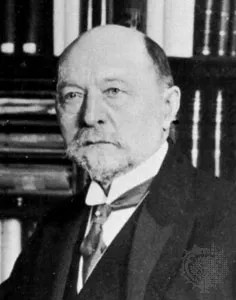
In 1892, a new way to fight a deadly childhood disease entered the market. It was not a pill you swallowed or a shot you gave for prevention. It was a liquid extracted from the blood of infected animals, designed to neutralize the toxin that killed patients. This was diphtheria antitoxin, and its development marked a turning point in medicine. The man largely credited with bringing it to life was Emil von Behring.
Born in 1854 in Hansdorf, West Prussia (now Ławice, Poland), Behring was a German bacteriologist who helped found the field of immunology. His work did not just treat symptoms; it changed how doctors understood how the body fights infection. In 1901, he became the very first person to win the Nobel Prize in Physiology or Medicine. The citation was specific: his work on serum therapy, particularly for diphtheria.
How Behring discovered passive immunity
Behring’s path to this discovery was not linear. He earned his medical degree in 1878 from the Friedrich-Wilhelms-Institut in Berlin, the Prussian army’s medical college. He spent the next decade serving in the Army Medical Corps. In 1889, he took a position as an assistant at the Institute for Hygiene in Berlin, under the direction of Robert Koch, one of the giants of modern bacteriology.
It was in Koch’s laboratory that the breakthrough happened. Behring worked alongside Kitasato Shibasaburo, a Japanese bacteriologist. Together, they demonstrated that you could give an animal passive immunity against tetanus. How? By injecting it with the blood serum of another animal that had already survived the disease. The serum contained antibodies that fought the toxin directly.
They called this substance antitoxin, a term Behring and Kitasato originated. The logic was simple but powerful: if the serum of a recovered animal could protect a new one, maybe it could save humans. Behring applied this technique to diphtheria.
Why diphtheria antitoxin mattered
Diphtheria was a scourge of the late 19th century. It caused thick membranes in the throat, breathing difficulties, and often death. Before antitoxin, treatment was largely supportive. After Behring and Paul Ehrlich developed the diphtheria antitoxin, it became a routine part of treatment.
The product was first successfully marketed in 1892. This was not just a laboratory curiosity. It was a commercial medical product. Its availability meant hospitals could actively neutralize the diphtheria toxin in patients, significantly changing the course of the disease.
“The practical goals of blood serum therapy” was the title of one of Behring’s key writings, published in 1892. It signaled a shift from theoretical immunology to applied, life-saving medicine.
Where Behring worked after the breakthrough
After his time in Berlin, Behring moved to Halle in 1894. The following year, he became director of the Institute of Hygiene at the Philipps University of Marburg. He stayed there until his death in 1917.
His work


