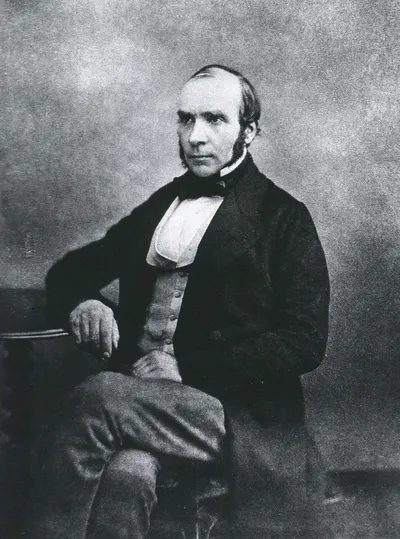
John Snow didn’t just study disease. He mapped it.
Born in York in 1813, Snow became the man who helped us understand how cholera actually spreads. Most people know him as the father of epidemiology. That’s because of his work in London during the 1850s. He proved that dirty water caused outbreaks. Not bad air. Not miasma. Water.
He died young. Only 45 years old. But his methods are still the gold standard for tracking illness today.
His most famous case study is the 1854 Broad Street pump outbreak. Snow traced the deaths back to a single water source. It wasn’t just a guess. It was data. He plotted every death on a map. The cluster was undeniable.
Then there was the “Grand Experiment.” He compared two areas of London. One got water mixed with sewage from the Thames. The other got cleaner water from a different source. The death rates told the story. The contaminated group suffered far more.
Snow also had a side career that made him famous among the elite. He was an anesthesiologist. He knew his stuff when it came to ether and chloroform. Queen Victoria hired him. Twice. Once for Prince Leopold in 1853. Again for Princess Beatrice in 1857. She wanted him to manage the pain. It was a sign of how much her doctors trusted his skill.
All of this came from a guy with a humble background. He didn’t have a fancy degree. He just had a sharp mind and the courage to challenge the accepted wisdom of his time.
Early Life and Medical Training
Snow’s start wasn’t glamorous. He grew up in Yorkshire. The son of a farm laborer. But he had a knack for learning. He trained under a surgeon in Newcastle. Then he moved to London. He apprenticed with a local doctor. This was how you became a physician back then. No medical school degree required upfront.
He worked in a colliery (coal mine). He saw workers sick from gas exposure. It taught him about toxicology. Later, he studied the effects of chloroform on animals. This hands-on experience mattered. It gave him a practical eye for how drugs affected the human body.
In 1844, he joined the Royal College of Surgeons. By 1850, he was a member of the Royal College of Physicians. He wasn’t just a street doctor. He was becoming a respected scientist.
He started writing about cholera early. Before the Broad Street pump, he had already questioned the prevailing theory that cholera was spread by air. He suspected it was ingested. But proving it required more than suspicion. It required proof.
The Cholera Outbreaks
Cholera was terrifying. It struck without warning. Victims dehydrated rapidly. They died within hours. Panic swept through London in 1831 and again in 1849. The official explanation? Miasma. Bad air. You opened your windows. You avoided crowded places. It didn’t work.
In 1854, the outbreak hit Soho. It was severe. Snow didn’t wait for permission. He went to the neighborhood. He interviewed families. He


John Snow’s early life was far from the ivory tower of modern academia. Born in York, he was the eldest of nine children to a coal yard laborer. After a brief stint at a local school, he left home at fourteen. He didn’t go to a university right away. Instead, he cycled through three medical apprenticeships across Yorkshire.
It was in 1831, while visiting coal miners, that he first encountered cholera. He couldn’t have known it then, but this disease would define his career. Formal education came later. By 1836, Snow was studying medicine. He earned his doctorate from the University of London in 1844. Two years later, he became a licentiate of the Royal College of Physicians. This was a big deal. It placed him in an elite tier of London’s medical establishment. He set up shop in Soho. He lived there. He practiced there. He researched there.
Then came the anesthesia revolution. In 1846, Snow heard about ether being used in America to numb patients during surgery. He mastered it quickly. By 1847, he was the anesthesiologist at St. George’s Hospital. He also started working with chloroform. The standard method of the time was crude. Drops on a handkerchief? Inconsistent. Dangerous. Snow built a device to fix this. His apparatus made administration safer and more effective.
His fame skyrocketed when he administered chloroform to Queen Victoria during childbirth. The social stigma around pain relief in medicine evaporated almost overnight. He wrote extensively on the subject. His book, On Chloroform and Other Anaesthetics, was published posthumously in 1858.
But his legacy extends beyond pain relief. The focus of his scientific endeavors had shifted toward understanding disease transmission.
Broad Street pump and the “Grand Experiment”
The story of John Snow and the Broad Street pump is often told as a simple triumph of observational science. It’s cleaner that way. But the reality is messier. And more important.
In the summer of 1854, cholera hit Soho hard. Snow didn’t just watch it happen. He mapped it. He went door to door. He interviewed families. The data pointed to a single source. The public water pump on Broad Street.
He didn’t have a microscope that could show the bacterium Vibrio cholerae. Koch wouldn’t isolate it until later. Snow worked with what he had. Statistics. Geography. Human behavior. He noticed that workers at a nearby brewery didn’t get sick. They drank beer instead of water. Or they were given free beer as part of their wages. The pattern held. Workers in other industries, if they drank from the pump, got sick. If they didn’t, they didn’t.
This wasn’t just a case study. It was an early form of epidemiological field work. Snow identified the contaminated pump handle as the vector. He had the handle removed. The epidemic declined.
Was this the “Grand Experiment”? Some historians argue so. It was a natural experiment. A random distribution of exposure based on where people lived and drank. Snow’s intervention—removing the handle—was the variable. The result was a drop in cases.
Critics at the time dismissed him. The prevailing theory was
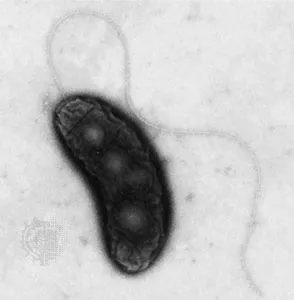

The Germ vs. Miasma Debate
Cholera hit London hard in the early 19th century. The first wave arrived in 1831–32. John Snow was just starting out then. He had much to learn. The disease returned with a vengeance in 1848–49. This time, Snow co-founded the London Epidemiological Society. The goal was simple. Advise the government on how to stop the spread.
His theory clashed with everything everyone else believed.
Most people thought cholera came from miasma. Bad air. Rotting organic matter filling the lungs. Snow disagreed. He suspected a microbe. A germ. Spread by feces. Contaminated water. Soiled clothes. Direct contact.
The debate lasted years. Clinicians and population data fueled both sides. Nobody had the final proof. The cause remained obscure. It wasn’t until the 1880s that the causative organism, Vibrio cholerae, was well-characterized. Discovered in 1854, it took decades to truly understand it. The evidence finally tipped the scale. Germ theory won. Miasma faded into history.
Mapping the Outbreak
Snow’s reputation didn’t come from theory alone. It came from two studies during the third epidemic. 1853 to 1855.
The first study focused on the Broad Street pump. Soho was decimated. Snow used maps. He used graphs. He traced the infection back to a single water source. Contaminated water. The logic was undeniable.
The second study was the “Grand Experiment.” Also 1854. He compared two neighborhoods. Both were nearly identical in population and conditions. The only difference was their water supply. One company drew from the upper Thames. Clean water. Away from the city’s sewage. The other company took water from the heart of London. Sewage-infected.
The results were stark. The polluted water killed more people. Snow proved the harmful effect of contaminated water in real-time. He didn’t just observe. He suggested interventions.
On the Mode of Communication of Cholera
Snow published these findings in 1855. The book was titled On the Mode of Communication of Cholera. It included his innovative disease maps. Visual proof of a invisible killer.
The work didn’t get immediate fame. It took until the 1930s for the significance to sink in. Republished as a classic. Recognized as foundational.
His methods were ahead of their time. Using geography to track disease. Identifying vectors before they were fully understood. The Broad Street pump incident remains a textbook example. But the broader lesson was how to investigate an epidemic. How to separate fact from fear.
Did the government listen immediately? Not really. They were slow to act. But the data was there. Clear. Unignorable.
We still map outbreaks today. We still look for the source. The tools have changed. The logic hasn’t. Snow showed us how to see what was hiding in plain sight.