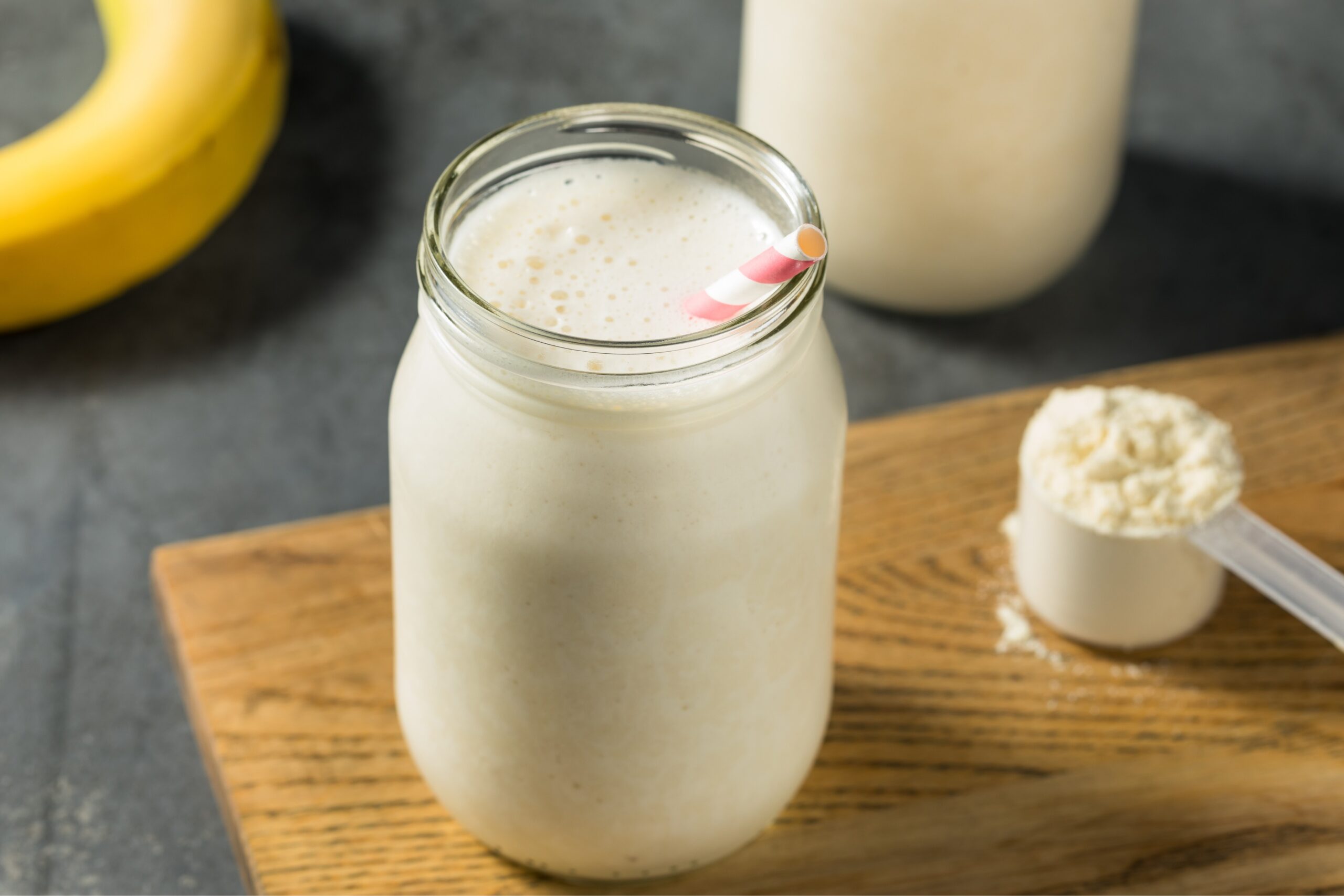
Shakes are fast. That’s their only real virtue.
You buy a tub or scoop something homemade and get roughly 15 to 20 grams of protein in a glass. It is easy. It is also mostly just one ingredient, minus the flavorings and thickeners that usually fill the gap between “nutrition” and “chemical experiment.” Whole food? That comes with a bonus track. Vitamins. Minerals. Nutrients your body actually wants, not just what it tolerates.
Why mix it when you can chew it?
Here is what actually holds its weight.
Dairy With Teeth
1. Cottage Cheese
It sounds humble. It lies on the counter in plastic tubs looking harmless. One cup of large curds gives you 23.3 grams of protein. You can eat it with spoons like a snack, or stir it into eggs, pancake batter, and dips.
It isn’t just protein either. You get Vitamin B12, calcium, and selenium. The texture might not win awards, but the stats are undeniable.
2. Greek Yogurt
Regular yogurt is pretty thin on the protein front. Greek yogurt? Different story.
One 7-ounce plain, low-fat container delivers 25 grams of protein. More than twice what you get in the standard stuff. It’s packed with calcium which does heavy lifting for bones, nerves, muscles, and hormone secretion. It builds structure. It regulates function. It is a dense package.
Poultry and The Ground Truth
3. Chicken Breast
The boring answer that is rarely wrong.
Three ounces of skinless breast provides 25.9 grams of protein. It brings B vitamins, zinc, and selenium to the table. You can grind it, cube it, or make a salad with it. It works as a lunch. It works as dinner. It works for almost anything.
4. Ground Turkey
Leaner than beef. Slightly more versatile.
Three ounces give you 23.3 grams of protein. It’s loaded with Vitamin B6 which facilitates over 100 enzymatic reactions you don’t think about until you stop them. Also contains zinc for immune function. It cooks fast and tastes like what you think it should.
Fish You Can Actually Stock
5. Canned Tuna
Shelf-stable. Buy in bulk. Done.
Three ounces yield 20.1 grams of protein. It is low-carb, making it ideal for keto dieters who hate carbs but love convenience. Keep a dozen cans in the cupboard and you never panic about dinner.
6. Canned Salmon
Fresh salmon is nice. Canned is strategic.
Three ounces offer 19.6 grams of protein. The bonus? Omega-3 fats. Specifically DHA and EPA. These regulate inflammation and support immunity. You also get potassium and Vitamin B12. Plus it costs significantly less than the fresh fillet.
7. Shrimp
It’s cheap. It cooks in two minutes.
Three ounces provide 20.4 grams of protein. High in astaxanthin, an antioxidant that protects cells from damage. It adds body to salads and stir-fries without the heavy calories of red meat. Low carb. High reward.
8. Cod
White fish. Quiet protein.
Three ounces deliver 17.3 grams of protein. It doesn’t scream for attention but it delivers. Lean, flaky, and easy to digest.
Plant-Based Power
9. Tempeh
Fermented soybeans. Firm. Meaty.
One cup offers 33.7 grams of protein. That number is hard to beat. It contains iron, folate, and calcium. It has a chew that mimics meat, so vegans don’t feel like they are eating cardboard.
10. Edamame
The kid at the bar snack.
One cup yields 18.4 grams of protein. Good for plant-based diets. It is high in fiber which keeps the gut happy, and folate which helps with DNA synthesis and red blood cell maturation. Pop them in your mouth or boil them in broth.
11. Lentils
Nutritional powerhouse? Maybe a stretch, but they try.
One cup cooked provides 17.9 grams of protein. Rich in magnesium, zinc, iron, and potassium. The fiber content helps both your stomach and your heart.
12. Navy Beans
White, small, dense.
One cup cooked offers 15 grams of protein. One of the better plant sources available. Loaded with magnesium to help regulate blood sugar and blood pressure. Also brings folate, iron, and selenium to the meal.
13. Seitan
Gluten itself, isolated.
Three ounces give you 15 grams of protein. It comes from wheat gluten, so avoid it if you are celiac. For everyone else? It has a chewy texture that acts as a convincing meat substitute in sandwiches and stir-fries.
The Heavy Hitters
14. Beef
Red meat. Unapologetic.
Three ounces contain 25.8 grams of protein. It is packed with iron. Make a burger. Make a bolognese. Throw it on a sandwich. It is flexible and efficient.
15. Sardines
Tiny. Bony. Essential.
One can (3.75 ounces), offers 22.6 grams of protein. They are tiny fish with big nutrient density. You get Vitamin E, calcium, B12, and iron all at once. Eat them on crackers. Mix them into pasta. Put them on pizza. They survive everything.
16. Chicken Liver
The ultimate nutrient bomb.
Three ounces deliver 20.8 grams of protein. But the protein isn’t even the main event here. It is full of Vitamin A, iron, folate, and B12. Most people avoid it for taste, but it cooks in minutes and replaces expensive steak in many recipes.
The Portable Option
17. Protein Bars
Sometimes you are running.
Bars contain between 15 and 20 grams of protein, though quality varies wildly. Read the label. Aim for at least 10 grams minimum, preferably closer to that 20. It isn’t food in the traditional sense, but it keeps you moving when whole food isn’t an option.
The Bottom Line
Shakes are liquid calories. Food is structure.
If you can, chew it. If you can’t, drink it. But don’t pretend one is the same as the other.
Nutrition is additive. A shake replaces a meal. Food builds it.
Pick one. Try it. See how you feel.