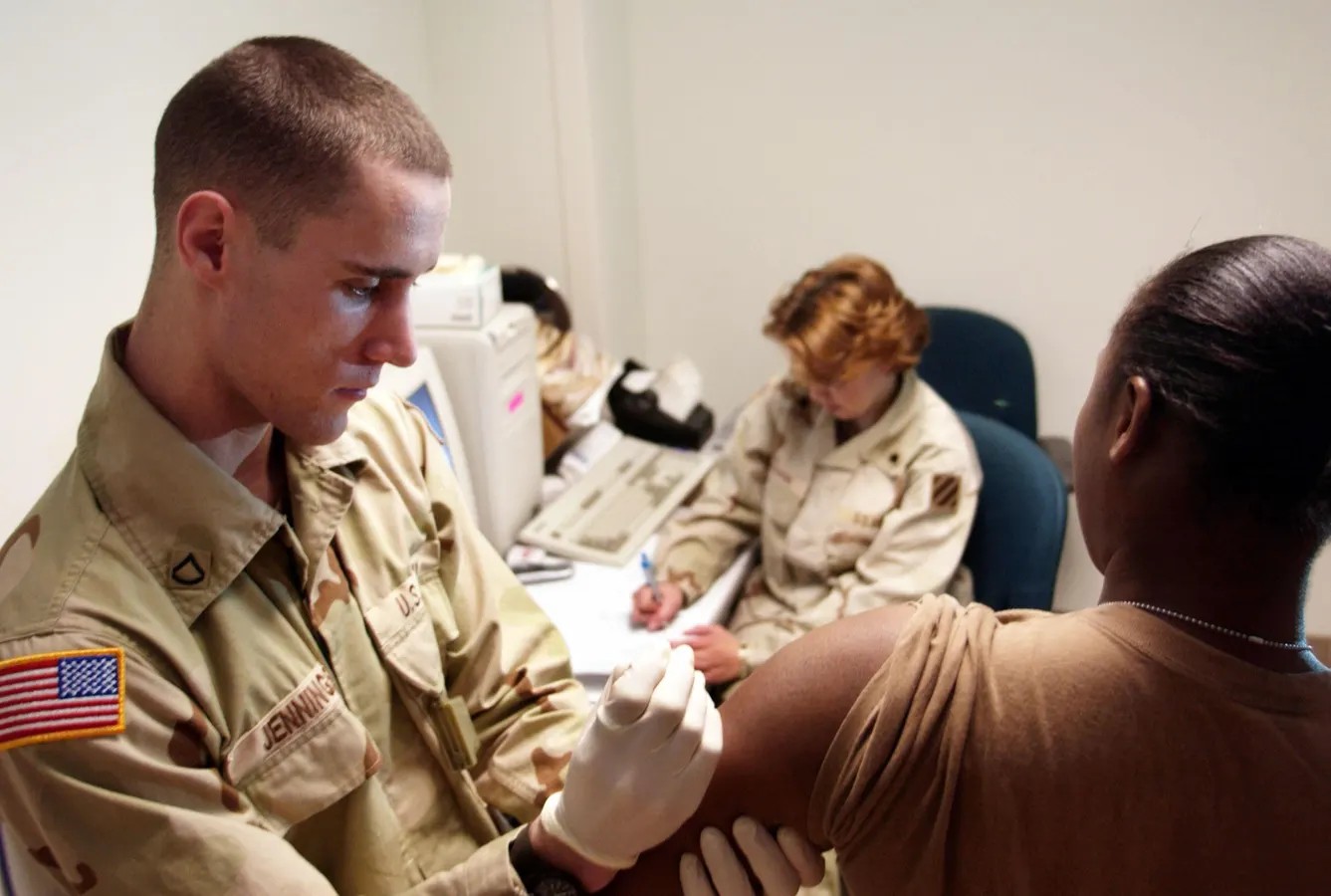
Defense Secretary Pete Hegseth has announced a significant policy shift: U.S. military personnel will no longer be required to receive annual influenza vaccinations. Characterizing the long-standing mandate as “absurd overreaching” that weakens war-fighting capabilities, Hegseth framed the decision as a move toward “common-sense” autonomy.
However, medical experts and military historians warn that this decision ignores a century of lessons learned from the battlefield, where infectious diseases have often proven as deadly as enemy fire.
The Historical Cost of Disease in Warfare
History demonstrates that infectious diseases can decimate a fighting force more effectively than combat. The risks are not theoretical; they are documented through centuries of military struggle:
- The 1918 Pandemic: During the “Spanish Flu” outbreak, influenza caused approximately 45,000 deaths in the U.S. military—nearly equaling the 53,402 deaths caused by combat.
- Smallpox Lessons: As early as 1777, George Washington recognized that smallpox was decimating his troops, leading to mandatory vaccinations to ensure survival.
- Modern Outbreaks: In recent decades, adenovirus outbreaks in training camps have caused high hospitalization rates (up to 20%). Data shows that when vaccines were unavailable between 1999 and 2011, cases surged; when they were reintroduced, cases plummeted.
The central issue is density. Military personnel operate in close quarters—ships, barracks, and tents—where viruses spread with extreme efficiency.
The “Readiness” Paradox
While Secretary Hegseth argues that mandates weaken readiness, medical professionals argue the opposite. In a military context, “readiness” refers to the ability of a unit to deploy and execute missions. An outbreak of illness creates a massive drain on this capability.
“Troops living in close quarters are at especially high risk of acquiring and transmitting diseases like influenza, affecting their ability to respond to threats,” says René Najera, Director of Public Health and History of Vaccines at the College of Physicians.
Key risks to mission readiness include:
* Mass Incapacitation: As seen during the COVID-19 pandemic on the USS Theodore Roosevelt, where over 1,200 crew members were infected, illness can sideline entire units.
* Loss of Manpower: Dr. Shane Solger, a former Naval Medical Officer, notes that even if the flu isn’t fatal, the “lost days” of work when soldiers feel sick directly reduce the military’s ability to function.
* Global Transmission: With the U.S. military operating globally, unimmunized troops risk carrying preventable diseases from one theater of operation to another, potentially destabilizing regions.
Challenging the Data
The decision also runs counter to specific military health trends. While general CDC data suggests flu hospitalization risks increase with age, a study of active-duty service members from 2010–2024 found higher hospitalization rates among the youngest age group (under 25). This suggests that the unique stresses of military life—physical exhaustion, mental stress, and close-quarters living—make younger service members more vulnerable to severe illness than the general public.
A Shift in Policy Direction
This move aligns with a broader trend within the current administration to limit vaccine mandates, including policies regarding COVID-19 and Hepatitis B. This shift prioritizes individual autonomy over the collective biological security of the force.
Currently, the military maintains a rigorous vaccination schedule for various threats, including yellow fever, tetanus, and typhoid, to protect against both natural outbreaks and the potential weaponization of pathogens. The removal of the flu mandate raises a critical question for defense planners: At what point does individual freedom compromise national defense?
Conclusion: By removing the flu vaccine mandate, the military trades a collective preventive measure for individual autonomy, a move that medical experts warn could lead to preventable outbreaks, lost man-hours, and diminished combat effectiveness.