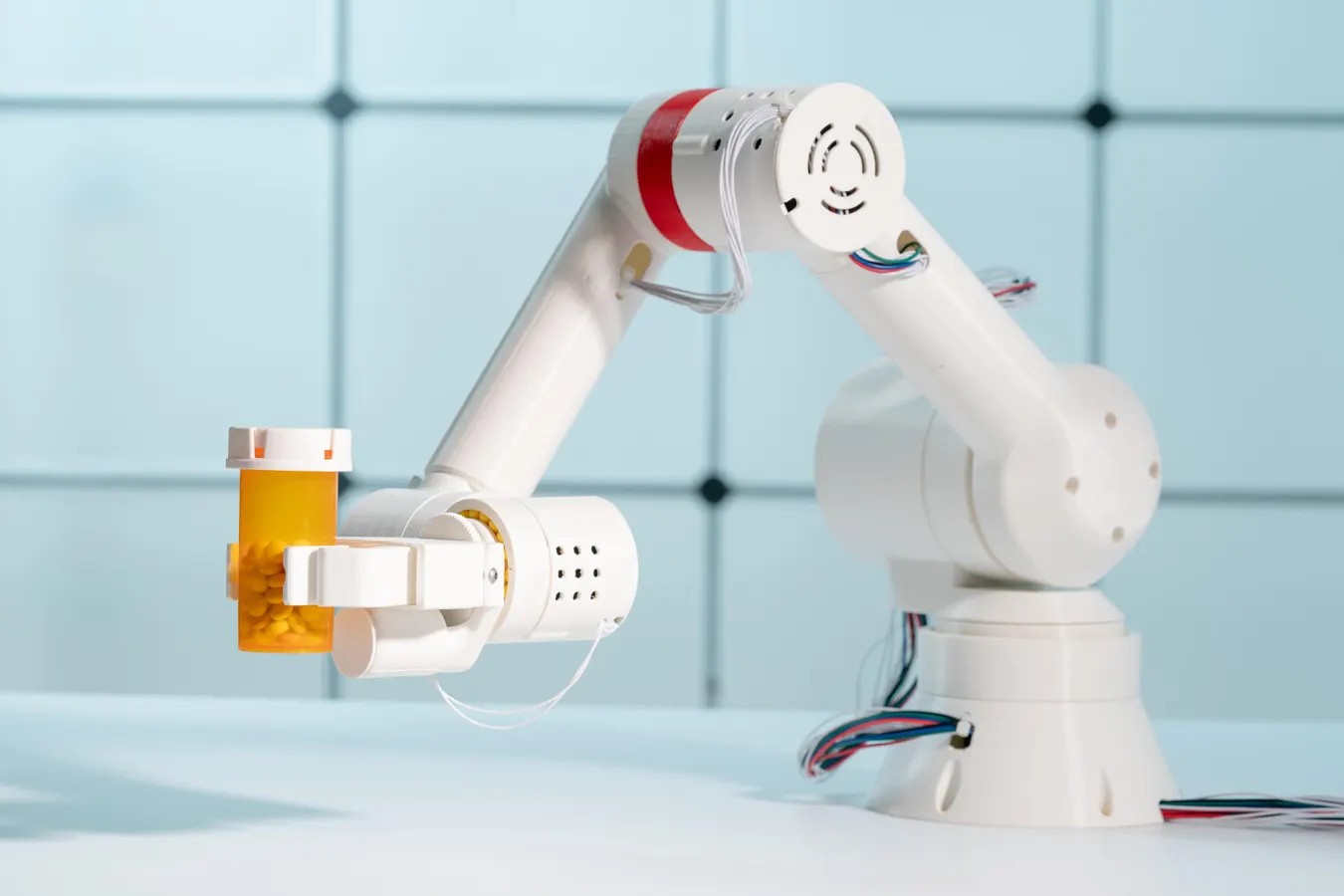
Autonomous pharmacies aren’t sci-fi anymore. They’re happening. And right now, a startup named Queue is making a lot of noise.
Queue just exited stealth mode with a robot that takes sealed bottles in one end and spits out filled prescription vials the other. Simple mechanics. Massive promise. The company says they can slash medication delivery costs by 96%. Ninety-six percent.
Think about that for a second. Traditional pharmacy margins are razor-thin, labor is scarce, and stores keep closing. Queue’s investors aren’t impressed with “managing” that mess; they’re backing the automation of the whole physical fulfillment layer. As one put it, they have “exceptional founders solving a massive, urgent problems with technology.”
High praise. But they’re not alone.
Remember Amazon? They rolled out automated kiosks at One Medical locations last year. Basic stuff: antibiotics, blood pressure meds, inhalers. Hannah McClellan, VP of ops at Amazon Pharmacy, called the experience “incredibly satisfactory.” She said they’re using their classic playbook: start with the customer, work backwards.
If Jeff Bezos is building machines to fill prescriptions, Queue has to feel a little safer about its business model. Validation works both ways.
Why It Matters
This isn’t just about cooler tech. It’s about access. Or the lack thereof.
GoodRx data shows nearly a third of Americans skip filling their scripts. Costs. Distance. Desperation. We’ve created “pharmacy deserts” where people commute for hours just to pick up a pill. Is this really the best we can do?
Robots could fix the geography. Put a dispensing machine in a retail strip, a rural clinic, a hospital corridor. Lower the cost barrier. Increase reach.
But hold on.
Here is the snag.
A pharmacist isn’t just a human AT M. In rural towns especially, they’re the primary point of contact for healthcare. They advise. They counsel. They catch interactions. For some people, talking to their pharmacist is the only health checkup they get all year.
Replace that human touch with a cold metal box, and you lose the safety net.
Automation cannot be viewed as a replacement for human expertise, but rather as a tool to scale it.
That’s the balance. That’s the hope. Machines do the counting; people do the caring.
Or at least, that’s the plan. The reality of scaling that rurrher —or “further,” if we’re fixing typos while we’re at it—remains to be seen. We’ll wait for the pills. And the conversations that used to go with them.