


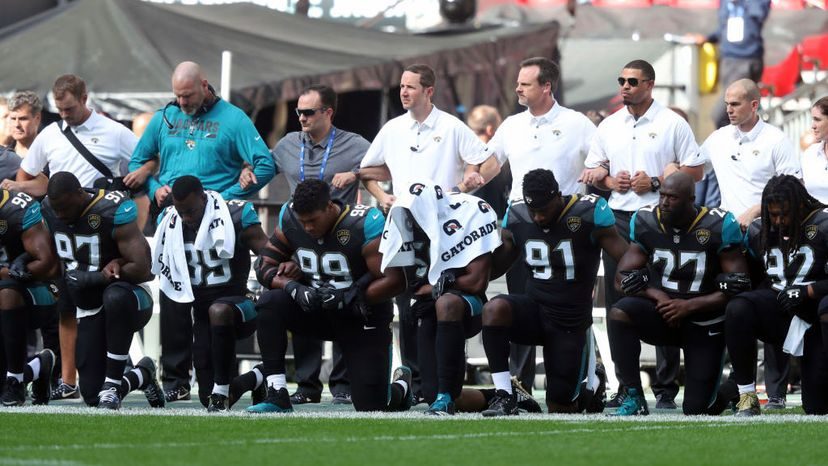
The NFL is back in the spotlight. President Donald Trump did not hold back at his Alabama rally. He called on NFL owners to fire players who protest during the national anthem. He calls them SOBs. The answer was immediate. Dozens of players linked arms. Several teams rose in unison. Others knelt. It was a show of solidarity that echoed the 2016 Colin Kaepernick controversy.
Kaepernick’s silent protests against police brutality and racial bias began at a San Francisco 49ers preseason game. The criticism was harsh. Many believed that not standing was disrespectful to the military. They argue that this disrespects veterans who risk their lives fighting for freedom.
But why is pro football so interested in public acts of patriotism? This is not always the case.
Orin Stern, sports historian at Duke University notes that sports were not tied to national identity until the modern Olympics began in 1894. Until then, it was “city to city, village to village”. Athletes compete in their local communities. It’s not their country.
Martin Polly of De Montfort University in the UK noticed a similar change. At the same time, the British domestic championships were also held. England, Northern Ireland, Scotland and Wales fielded their own teams. This is the first state vs.
At this time, the baseball players sang the national anthem
By the turn of the 20th century, baseball had become America’s unofficial national sport. It is part of the cultural fabric. “It’s as American as baseball and apple pie.” But it’s not yet a public expression of patriotism.
One night in September 1918, the situation changed completely. The Chicago Cubs and Boston Red Sox met in the first game of the World Series. The country was plunged into World War I, and the morale of the people was low. The atmosphere on the field was festive. Almost silent.
Then a military band appeared on stage.
It was in the bottom of the seventh inning. They began playing “The Star-Spangled Banner.” This is a famous patriotic song. It is not yet an official national anthem. This did not happen until 1931.
Red Sox third baseman Fred Thomas is on leave from the Navy. He immediately took off his hat. he paid attention.
The other players followed suit. They took off their hats. They put their hands on their chests.
A New York Times reporter described the situation. The song starts with a few notes. Then others joined in. By the last note, a sweeping melody ran across the field. There was loud applause from the audience. This showed the highest enthusiasm of the day.
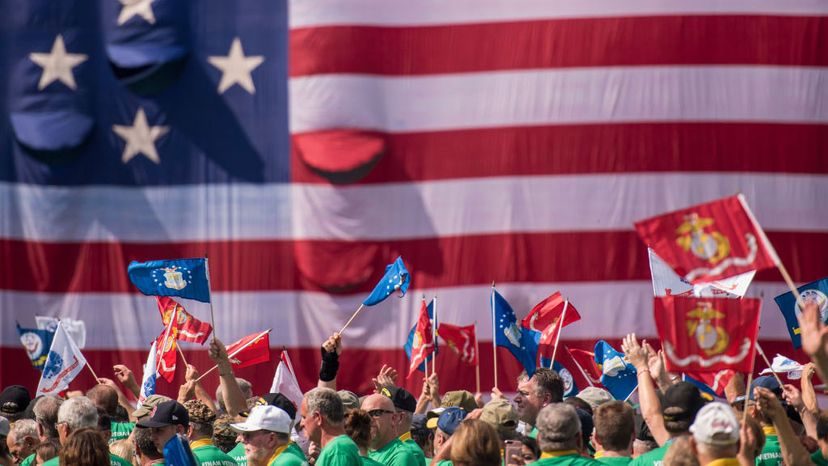

The militarization of #Sports: From baseball’s national anthem to football’s fight
Even though the baseball world suddenly accepted the national anthem, the momentum didn’t stop. The Star-Spangled Banner was so popular during the game that it had to be played again in the bottom of the seventh inning of Game 2. When the series returned to Boston, the national anthem had been moved to the pregame festivities. A tradition was born. It wasn’t until 1941, when the United States entered World War II, that the national anthem truly became a staple before baseball games.
How football supports patriotism in sports
While baseball introduced the nation to sports-inspired patriotism, football cemented the link between sports and overtly militant nationalism. This change happened in the 1960s and 1970s, when the popularity of the sport skyrocketed.
Football is basically military combat disguised as a game.
The similarities are structural and linguistic. The coach plays the role of “general”. Groups of faceless warriors wearing helmets formed “formations” and fought in “trenches”. They “blitz” their attack. They throw long “bombs” into the goal area. The language itself is borrowed from the struggle.
“There’s a kind of sacred connection between football, war and American identity,” Stern said. “There is a growing sense of patriotism on the football field.”
The NFL hasn’t just embraced that image. We institutionalized it. The national anthem is played before every game. But National Anthems are rarely just songs. They will be accompanied by a military honor guard and a group of veterans. It is not uncommon to see Air Force planes flying overhead. The stadium became a battlefield. The fans became an army. This match became a ritual of national unification.
Today, it’s hard to tell the two apart. The roar of the crowd. The smell of grass. A view of a jet plane pulling smoke in the sky. All this adds up to sensory details.
But does it have to be this way?
Maybe that’s why the bond is so strong. Perhaps the battlefield metaphor is too useful to discard. The uniform suits you. These strategies reflect the movements of the forces. I feel the stakes there.
No one can say for sure when the line between sports and warfare will really blur. Maybe it was yesterday. Or a hundred years ago. The answer is hidden in the shadows.
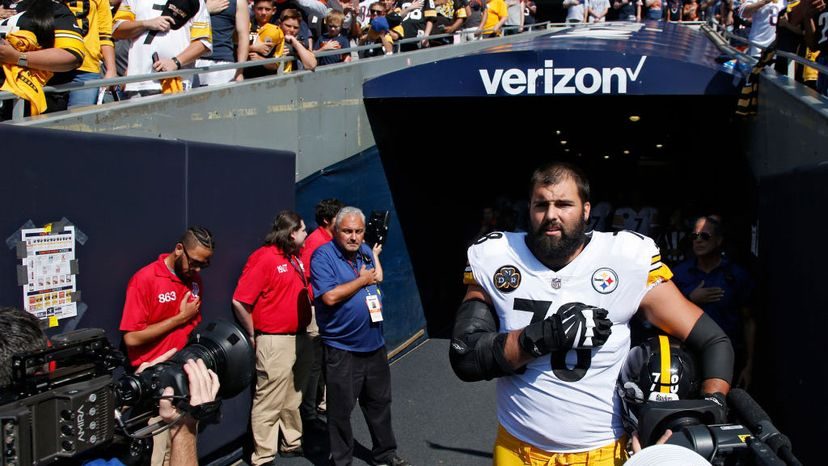
Why #NFL stadiums look like military bases
Average fan demographics can explain a lot. The 2014 study gives a clear picture of this. The basic population is mainly Caucasian (83%), male (64%) and over 45 (51%). Politically, the group is very conservative. Republicans are 21 percent more likely than Democrats to agree.
This coordination also extends to the board. The team’s owners reflect this if they didn’t expand their fan base.
“The NFL is the most conservative sports league in terms of the ‘America First’ mentality preached by its owners,” Stern said. There is no diversity in the ownership group. You can only have one owner of color. There were no African-American or Latino owners at the table. They are overwhelmingly Republican.
But the spectacle of patriotism transcends community politics. It’s a structural thing.
A 2015 report revealed that the US Department of Defense (DOD) paid NFL teams more than $5 million between 2011 and 2014. The money was not used to buy broadcast rights. This is meant to be a public show of support.
Guard of honor. Field size flag. On the big screen, the “Hometown Heroes” segment highlighted the veterans in the stands.
The Pentagon defended the spending. They call it a valuable recruiting tool. They claim this is not “paid patriotism”. This practice was discontinued after the publication of the report.
Different relationships with European national anthems
How does sports patriotism in the United States compare to other countries around the world?
This is not true. not much.
Poli at the International Center for Sports History and Culture points out that the national anthem is not heard in regular club matches in Europe’s biggest football leagues. They only appear during the World Cup, when the national team participates.
In England, football is embedded in the national identity. The crowd sang World War II war songs. However, their expression was very gloomy. It’s not always pretty.
- For some people, supporting the national team is a patriotic act that does not require wearing the flag or the anthem, Poli said.
For some, the ritual is central. They wore team colors. They paint their faces.
For some people, this can turn violent. Hitting fans from other countries is part of expressing national pride. Not all sports-inspired patriotism is healthy.
Current rules
The NFL’s relationship with protests is evolving rapidly.
In May 2018, the team owners approved a new policy. Players must stand during the national anthem.
Teams are fined if a player kneels or sits.
The player has one option. Players may remain in the locker room during the national anthem.

