It’s a cliché that necessity is the mother of invention. It sticks around because it’s true.
Picture this. Rural Southern town. Great Depression. Crops failed. Jobs don’t exist. You have one asset left. An old Ford. You’ve spent years sweating over that engine in Georgia heat. Knuckles scraped raw. Wrench turning bolts until your hands are permanently stained with grease and blood. That car is your world. Your ticket out of poverty.
You’re a good driver too. Loose, unorganized races on back roads and pastures. You’ve beaten everyone or at least made them work for it. Then some connected folks notice. They offer a job.
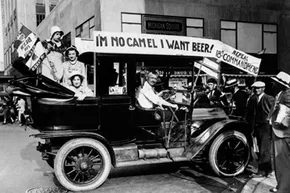
Prohibition ended, but many towns stayed dry. Selling liquor there was illegal. Even where it was legal, selling without notifying authorities meant keeping the tax money. More cash in the pocket. Your new gig? Running homemade liquor into dry towns. Deliveries. Evading police. If you can’t hide from the federal revenuers, you have to outrun them.
This wasn’t uncommon in the 1920s and 30s. But here is where the story twists. The men using mechanical skills and driving talent to outrun the law eventually founded one of America’s biggest sports. NASCAR.
Need to survive and love fast cars. That mix created something unique. Football didn’t evolve from dodging cops. Baseball didn’t either.
Weekend races in small Southern towns. Weekdays spent as whiskey cars. Souped up engines. Illegal cargo. Touring the South. The characters and technology behind those early race cars are as intoxicating as the moonshine they carried.
Why moonshine?
The answer lies in the economics of the era.
When the Volstead Act was repealed in 1933, the legal production of alcohol returned. But local control remained strict. Many counties and cities remained “dry” by choice or law.
For a bootlegger, a dry town was a market with zero competition. No other legal liquor stores. Demand was high. Supply was low. The risk was high, but the reward was higher.
Selling liquor without notifying authorities meant keeping the tax money.
This created a specific type of driver. One who knew the roads better than the law. One who could handle a heavy load at high speeds. One who could modify an engine to squeeze out extra horsepower.
The car wasn’t just a vehicle. It was a tool. A weapon. A livelihood.
The connection between moonshine running and stock car racing isn’t just anecdotal. It’s structural.
Drivers learned to navigate twisty mountain passes. They learned to repair engines in the field with limited tools. They learned to drive faster than the chasers pursuing them.
When racetracks were scarce, backroads were the track. The finish line was a safe distance away from the sheriff’s cruiser.
This background shaped the sport. The cars were stock. The drivers were locals. The stakes were real.
Football players train in gyms. Baseball players practice in stadiums. NASCAR drivers learned on the edge of survival.
The skills transferred directly.
- Engine tuning: Maximizing horsepower for speed.
- Chassis handling: Keeping control on loose surfaces.
- Strategic driving: Reading traffic and terrain.
These were the same skills used to evade federal agents.
The transition wasn’t sudden. It was gradual.
As racetracks became more common, the moonshine drivers brought their techniques with them. They treated the oval tracks like long, flat backroads. They pushed the limits of what the stock cars could handle.
The fans loved it.
They saw real people. Real stakes. Real cars.
It wasn’t a sanitized sport. It was raw. Gritty. Dangerous.
This authenticity is still part of NASCAR’s DNA.
Today’s drivers don’t carry whiskey in their trunks. But the spirit remains.
The need to be faster

It feels backward, doesn’t it? We associate NASCAR with polished sponsorships and modern stadiums. But the engine of that culture was built on bootlegging. The sport didn’t just borrow from illegal liquor sales; it was born from the same desperate, adrenaline-fueled race that defined the American South from the 1920s through the 1970s.
The Prohibition Catalyst
Prohibition wasn’t just a ban; it was a business opportunity. When the nationwide alcohol ban kicked in, it cracked open the market for small-time producers. Farmers who used to make corn liquor for their own winter supply suddenly had a customer base stretching across state lines. The risk? Getting caught.
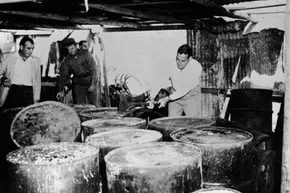
Moonshiners went deep into the backwoods. They buried their stills. If law enforcement found them, the stills were destroyed. That wasn’t just a fine; it was an economic death sentence. You lost your capital. You couldn’t produce another batch. The stakes were absolute.
Dry Counties and Tax Evasion
When Prohibition ended, the underground economy didn’t collapse. Many Southern counties remained “dry,” meaning legitimate liquor stores were legally barred from selling alcohol there. Moonshiners moved into that void. But there was a second motive beyond access.
They kept sales off the books. No federal taxes. The government didn’t take this lying down. They sent agents to the South to collect what was owed. The moonshiners called them “revenuers.” The chase became a ritual. Outrunning a revenuer wasn’t just about profit; it was about survival.
Economic Desperation
Why did it last so long? Because the South was left behind. The Great Depression hit the region harder and lasted longer than elsewhere. There was no industrial boom before World War II to save the local economies. Small farmers faced crop failures. Mills stayed closed. Unemployment was rampant.
When your family is facing ruin, you do what you must. You made do, or you ran moonshine. Often, you did both. The thrill of outrunning the police added a layer of emotional reward to the financial necessity. It was a game where the house was the law, and the players were the poor.
Whiskey Cars
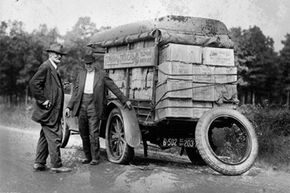
This context explains the “whiskey car.” These weren’t just modified sedans. They were the direct ancestors of stock cars. Drivers had to modify their vehicles to hide contraband and outrun law enforcement. The engineering constraints of smuggling liquor—hiding tanks, strengthening suspensions, optimizing weight distribution—mirrored the exact requirements of racing.
The drivers learned to handle high-speed chases on dirt and gravel roads. They learned to trust their instincts and their machines. When stock car racing formally emerged, the talent pool was already there. The skills were already tested. The cars were already built for speed and concealment.
The connection isn’t metaphorical. It’s mechanical. The same hands that calibrated a still calibrated the carburetor. The same eyes that scanned the rearview mirror for headlights scanned the track for competitors.
The sport was founded on the premise that if you can beat the law, you can beat the field.
This history explains why the culture is so deeply tied to independence, rebellion, and mechanical ingenuity. It wasn’t imported from Europe. It grew out of the dirt and the desperation of the South. The races were originally demonstrations of these skills
The Engineering of Evasion
Speed wasn’t just a preference. It was a survival mechanism.
You can’t have a whiskey car that crawls. Big V8s were the heartbeat of these machines. Drivers didn’t settle for stock power. They tuned. They supercharged. They turbocharged. They bored out the cylinders and stroked the cranks to squeeze every last horsepower out of the block.
The hardware varied by region and budget, but the goals were universal. Fords with flathead V8s were the standard bearers. If you had cash, you stole from the luxury shelf. A popular move was stuffing a Ford coupe with a Cadillac engine. That’s right. The same V8s that powered Cadillac ambulances found their way into illicit transport.
Chevrolet 350s were another favorite. Why? Because they were easier to modify than Ford powerplants. That adaptability is why you see so many classic hot rod Fords today running Chevy hearts.
Beyond Raw Speed
NASCAR cars look like street cars. Whiskey cars did not.
In racing, there are rules. In escape artistry, there were only results. Every modification served one purpose: leave the badge in the dust.
Power wasn’t the only trick. Psychological warfare played a huge role.
Drivers installed switches on the dash that cut the brake lights. Imagine chasing a car at night. You tap the brakes. The taillights don’t dim. You think they’re still accelerating. You take a corner too hot. You run off the road. Or you rear-end the whiskey car because you thought there was more distance than there actually was.
Suspension work mattered just as much. Beefy shocks kept the chassis level. It wasn’t just about handling better on dirt roads. It was about deception. A sagging rear end screams “heavy cargo.” A level car looks stock. It looks innocent. It looks like it’s carrying nothing but groceries.
The Hidden Truth
Law enforcement eventually got smart. They learned to look for the telltale signs.
So the builders went deeper. Hidden panels went into the trunk. Seats were rigged with false bottoms. Doors had secret compartments. The liquor could ride in plain sight, invisible to a cursory glance or even a standard search.
But cops aren’t fools. They started checking for weight discrepancies. They started looking for fresh paint over old seams. When the hiding spots were compromised, outrunning the pursuit became the only option left.
Whiskey Car Drivers
That’s where the human element took over.
A fast car with a bad driver is just a fast coffin. These weren’t pro racers. They were farmers. Mechanics. Hustlers. They knew every backroad, every pothole, every shortcut between the mountains.
They didn’t drive by the book because the book didn’t exist in their world. They drove by instinct.
When the lights flashed, the switch was thrown. The brake lights stayed dark. The shocks held firm. The cargo stayed hidden. And the driver pushed the pedal to the floor, trusting the V8 to scream and the tires to grip.
It wasn’t about elegance. It was about getting away with it. One more night. One more run.
The roads were wet. The engines were hot. And the game was just getting started.
It wasn’t just twenty-somethings behind the wheel. Think younger. Fourteen-year-old boys were running whiskey. They came from farm families where tractors and trucks were daily tools, not toys. They already knew how to wrench on engines and handle heavy machinery. It was a family operation.
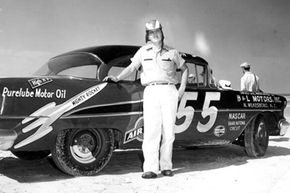
The best drivers possessed a specific mix of street smarts, nerves, and local geography knowledge. They didn’t just drive fast. They outwitted the law. Robert Glenn Johnson Jr., known to history as Junior Johnson, had a trick up his sleeve. He’d mount lights and a siren on his car. Spot a police roadblock ahead? Throw on the lights and sirens. The deputies, thinking a fellow officer was clearing the way, would dismantle the barricade. Johnson and his illegal cargo rolled right through.
Revenuers were outsiders. They didn’t know the backroads. Bootleggers did. This familiarity allowed for shortcuts, double-backs, and hiding spots. Drivers developed signature moves. The most famous is the bootlegger’s turn. You make a sudden 180-degree pivot. The police car tries to follow but loses momentum. You head off in the opposite direction before they can turn around.
Knowing the curves meant you could push the speed higher. You knew exactly how fast you could take a bend without flipping. Many died. They pushed their cars just a little too far.
The drivers knew their machines intimately. They worked on them. They modified them. Law enforcement officers knew their patrol cars, sure. But they didn’t design those cars for dirt roads, sharp turns, and high-speed chases. The bootleggers built their tools for the specific terrain they faced.
Whiskey car driving didn’t vanish overnight. It continued into the 1970s in parts of the South. But the golden age ended with World War II. Most drivers joined the armed forces. When they returned, they found legitimate uses for their skills.
Whiskey Cars and Stock Car Racing
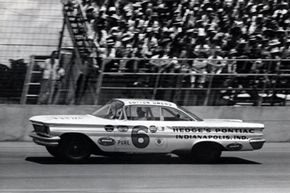
Poverty was rampant in small Southern towns during the 1930s, ’40s, and ’50s. Entertainment was scarce. Many communities lacked even a basic movie theater. Traveling to a larger town for a flick was a hassle and a drain on the wallet. Professional baseball and football hadn’t reached the region yet. There was nothing to watch on Friday nights.
But there were open fields. And there were fast cars. And there were drivers who knew how to use both.
Farmers with a little entrepreneurial spirit turned pastures into makeshift racetracks. Locals gathered around these dirt ovals for a small fee. They watched their neighbors compete for modest purses. Nobody got rich. But the bragging rights were real. The money helped.
This grassroots energy didn’t stay local. In 1947, promoters, drivers, and car owners from these rural races met in Daytona Beach, Fla. They formed the National Association for Stock Car Auto Racing (NASCAR).
The goal was simple. Build on the fan base already sown in those small towns. The cars had to be stock. Real production models. The same ones fans could buy at a dealership. This created a common bond. The driver and the fan were sharing the same machine.
That philosophy is where NASCAR history diverges sharply from its predecessor. The whiskey cars of the past didn’t follow the rulebook. They were built for one purpose: outrunning revenue agents. There were no restrictions on modifications. Speed and survival were the only metrics that mattered.
Bootleggers became drivers. Mechanics became crew chiefs. When NASCAR launched, these same people had to adapt to strict regulations. No more illegal mods. No more hiding from the law.
Bootlegging declined as the sport grew. It became legal. It became lucrative. Large-scale alcohol distributors finally entered Southern markets previously protected by prohibition-era enforcement. Drivers had a new outlet for their skills.
The cars evolved. They became faster. More mainstream. The image of a hot-rodding country boy fleeing federal agents faded into history. But the DNA remains.
Fans haven’t forgotten the colorful roots of their favorite sport. The grit of the dirt tracks is still there. Just under a layer of corporate sponsorship.
How Bootleggers Shaped Modern Racing
The transition from illegal racing to legitimate sport wasn’t just a change in legality. It was a shift in culture. The whiskey drivers brought a specific type of aggression to the track. They were used to pushing machines to the limit without regard for safety or rules. NASCAR channeled that energy.
But they tamed it.
The emphasis on stock car racing meant accessibility. Fans could relate to the vehicles. They weren’t exotic race cars. They were Fords and Chevys with reinforced frames. This strategy worked. The fan base grew. The sport expanded beyond the South.
Why Stock Cars Matter to Fans
The core appeal of NASCAR has always been relatability. The stock car concept ensures that what happens on the track has a parallel in the real world. You can buy the car. You can drive the car. You might not drive it as fast as the professional, but the connection is there.
This is different from other motorsports. Formula 1 cars are engineering marvels. IndyCar cars are specialized machines. NASCAR stock cars are modified versions of what you see in driveways.
That connection keeps fans loyal. It’s not just about the speed. It’s about the shared experience. The driver and the fan are in the same boat. Or rather, the same car.