


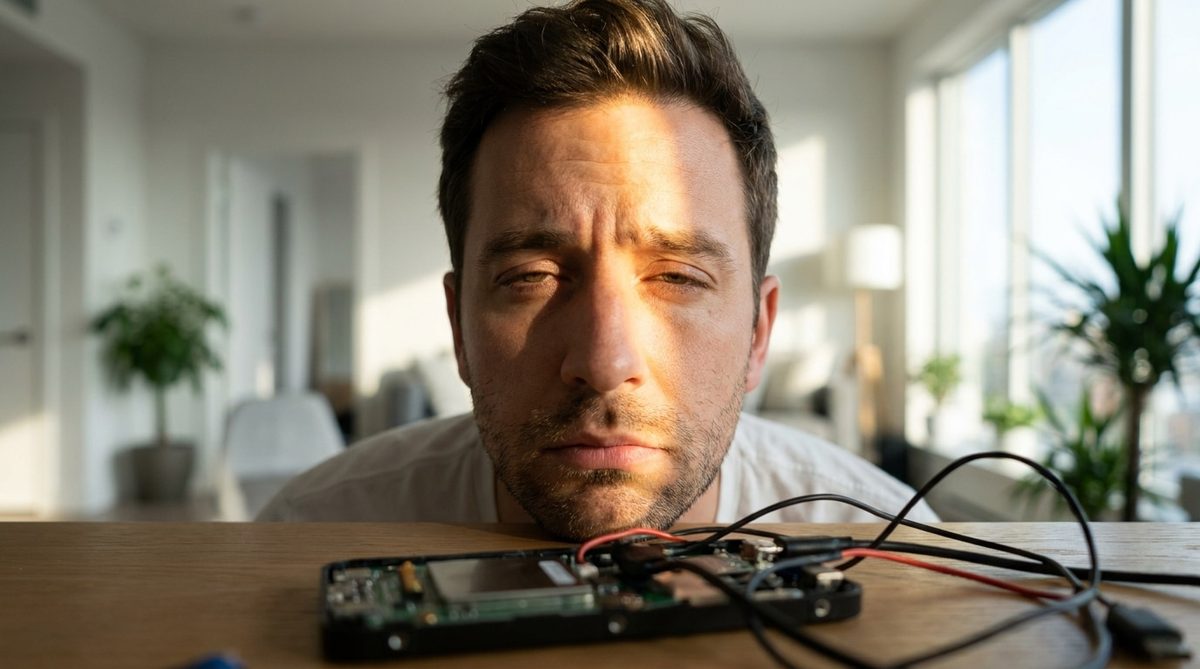
It happens every April. You buy a fancy new pair of running shoes. Or maybe it’s a pottery wheel. You spend hours watching tutorials. You feel alive. The energy is electric.
Then, three weeks later, that gear sits in the closet. Covered in dust.
You blame yourself. You think you lack willpower. That’s the wrong diagnosis. The failure isn’t moral. It’s biological.
Your nervous system isn’t broken. It’s just doing exactly what it evolved to do: seek novelty, then discard it.
The Biology of the “Spring Fever” Obsession
Why does this happen so fast? It’s not a lack of character. It’s a chemical event.
When you start something new, your brain lights up. Novelty triggers a massive release of dopamine. This is the neurotransmitter associated with pleasure and motivation. It creates a “high.” You feel invincible.
This state is often called hyperfixation.
It’s not a clinical disorder here. It’s just intense focus. But that focus is expensive. It burns through your mental energy reserves at a high rate. You think you’ve found your lifelong passion because the chemical signal is so loud. But that signal is fleeting.
Once the initial learning curve is conquered, the dopamine spike stops. The activity becomes routine. The brain stops rewarding it. The interest evaporates.
This isn’t abandonment. It’s a crash.
The Dopamine Crash: Why Routine Feels Like Failure
The problem is that we confuse excitement with sustainability.
In the beginning, every small step feels like a victory. Learning the basics. Buying the right tools. These are novelty rewards. They are easy to get.
But progress requires repetition. And repetition is boring.
“The intense neurochemical rush collapses the moment an activity imposes a routine constraint.”
When the novelty fades, your brain stops producing the same level of dopamine. Suddenly, gardening feels like a chore. Running feels like a punishment.
You aren’t lazy. You are chemically deprived of the “newness” reward.
The shame you feel is misplaced. You didn’t fail to persist. You failed to expect the crash. The intensity of the start was never meant to last. It was a spark. Not a furnace.
How to Hack Your Nervous System for Long-Term Habits
If you want to keep the hobby, you have to outsmart your biology. You cannot rely on the initial dopamine hit. That well runs dry.
Here is how to build habits that actually stick.
The 15-Minute Rule
Stop when you still want more.
It sounds counterintuitive. You want to quit when the energy is high. Leave the running gear on the floor. Put down the brush.
Why? Because stopping while you are having fun creates an “open loop” in your brain. Your mind stays interested. It anticipates the next session. If you exhaust yourself, the brain associates the activity with fatigue, not joy.
Keep it short. Keep it easy. Leave them wanting more.
Micro-Goals Over Big Dreams
Your brain needs frequent wins.
Don’t set a goal to “master pottery.” Set a goal to “throw one pot this week.”
Break the activity down. Make the steps so small they are almost laughable. Each small completion releases a tiny hit of dopamine. It’s not the massive spike of discovery. It’s a steady drip.
Steady drips build bridges. Spikes build cliffs.
Habit Stacking
Attach the new activity to an old one.
Do you drink coffee every morning? Make the new habit start right after that.
Weed the garden while the coffee brews. Do ten minutes of stretching while the kettle heats.
By linking the new behavior to an existing neural pathway, you reduce the cognitive load. You aren’t creating a new routine from scratch. You are grafting onto one that already works.
Accept the “Dip”
Motivation is not a straight line. It is a wave.
There will be a month where you don’t care at all. That is normal. It is the transition from “novelty” to “practice.”
Do not interpret this as failure. It is just data. It means you are moving from the fantasy phase to the reality phase.
If you wait for the excitement to return, you will wait forever. The excitement was the hook. The routine is the catch.
The Bottom Line
The guilt of quitting a spring obsession is unnecessary. It is a predictable physiological response to novelty wearing off.
You are not weak. You are human.
The goal isn’t to maintain the initial intensity. That’s impossible. The goal is to find a rhythm that survives the crash.
So, what’s next?
Maybe you’ll try hiking again. Maybe you’ll pick up the guitar. Just don’t buy the expensive gear yet.
Start small. Stop while you’re still hungry.
And if you quit in three weeks?
That’s okay. The next one will be different.