


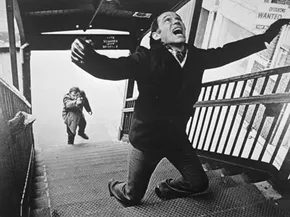
You know the drill. It’s 1973. Popeye Doyle is chasing heroin dealers through the New York subway. Cut to San Francisco. Steve McQueen’s Ford Gran Torino is dancing through the streets of Bullitt, winning an Oscar for its editing in the process. Then there’s To Live and End in L.A., where William Petersen sends a Chevy Impala careening the wrong way down a Los Angeles freeway. These scenes are iconic. They rely on the cinematic high-speed car chase.
But let’s look closer at the mechanics. Specifically, that hard turn. The driver cuts the wheel. The rear wheels fishtail. Tires jump off the pavement. The sound engineer layers in the screech of rubber on concrete. Then—boom—the engine roars, the car straightens, and it peels out. You’ve seen it a million times.
Notice something odd though?
The car slows down significantly. Almost to a stop. Why? Because control is lost. If the front of the car slides out during the turn, that’s understeering. If the rear slides outward, that’s oversteering. Either way, you’re eating up time.
In a movie, a lost few seconds is just a plot point. In NASCAR, it’s a lost win.
When a car is loose or tight, it’s not just about handling. It’s about physics. And physics doesn’t care about your reputation. Understanding how to fix a tight or loose car isn’t just for mechanics. It’s for anyone who wants to know why their favorite driver spins out on lap 300.
The Physics of the Spin
Let’s break it down. No jargon without explanation.
Understeering happens when the front tires lose grip. The car wants to go straight. The driver turns the wheel. The car ignores them. It plows forward. Like a truck in the snow. You might think this is safe. It’s not. You’re missing the apex. You’re losing speed.
Oversteering is the opposite. The rear tires lose grip. The back end swings out. The car rotates faster than you want. This is what makes the rear wheels jump. This is what creates that dramatic fishtail. It’s scary. It’s fast. And it’s usually a mistake.
In both cases, the car is “loose” or “tight.” These terms are used interchangeably by fans. They’re wrong. Or at least, incomplete. A loose car oversteers. A tight car understeers. But the root cause is different. And the fix is different.
Why Does It Happen?
You’re asking why. You want to know the why.
It’s down to weight transfer. When you brake, weight goes forward. The front tires gain grip. The rear tires lose it. This is why the back end swings out during braking. It’s why the rear wheels jump off the pavement.
When you accelerate, weight goes backward. The rear tires gain grip. The front tires lose it. This is why the car plows forward when you hit the gas in a corner.
But it’s not just about braking and accelerating. It’s about the setup. The suspension. The tires.
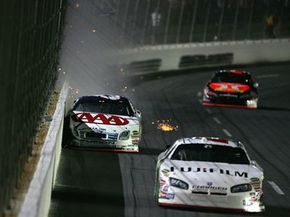

How Wedge Adjustments Keep NASCAR Cars from Sliding Out
In NASCAR, the gap between victory lane and the back of the pack isn’t measured in feet. It’s measured in thousandths of a second. That makes every marginal gain critical. The biggest lever a driver has? Car handling.
It’s simple physics working against you. On the straights, lateral stability keeps the car glued to the racing line. All four wheels point forward. The car doesn’t drift. You floor it. But hit the corner? Suddenly centrifugal force kicks in. It pushes the heavy machine toward the outside of the turn. Now you’re wrestling the steering wheel just to stay on course.
If that outward push overpowers your grip, disaster strikes. The car slides. Maybe it’s the rear tires losing traction. Maybe it’s the fronts. Either way, you’re hitting the wall. Fans eat it up. Drivers pay for it with seconds on the clock.
Understanding Loose vs Tight Handling
NASCAR drivers have specific terms for these failures. If the rear tires break loose and the tail slides out, the car is loose. It’s oversteering. You lose time fighting the slide.
If the front tires refuse to turn and the car plows straight despite your steering input, it’s tight. Understeer. You’re running wide, losing speed, and hoping the tires find grip before you run out of track.
Why does one happen more than the other? It’s in the suspension.
NASCAR cars use specialized springs to absorb the violent vibrations of tires skidding through a corner. Dampers take that energy and dissipate it. This stops the bouncing so the tires can regain traction faster. But springs aren’t set in stone. Crew chiefs can tweak them mid-race.
This is where wedge adjustment comes in.
The Wedge Adjustment Puzzle
Wedge adjustment lets the crew change how the car sits on its springs. A ratchet and jackscrew mechanism can tighten or loosen the suspension in seconds. Change the angle slightly, and you shift the balance. Make it looser? Tighter? It’s a constant game of musical chairs with physics.
Every track adds another layer of chaos. Dover is a beast because the turns are concrete while the straights are asphalt. The friction changes mid-lap. The track surface itself degrades as rubber builds up and tires wear down.
So the crew chief watches the data. The driver talks on the radio. “Car is tight.” “Car is loose.” Adjustments are made during pit stops. Seconds matter. The goal is always balance. No loose. No tight. Just predictable, fast turning. A balanced car wins.
There’s another way to handle centrifugal force. Slow down. But in NASCAR, lifting off the gas is basically a forfeit. Unless you want to finish last, you keep it pinned.
Related Resources
For those digging deeper into the mechanicals:
- Is it easy to cheat in NASCAR?
- Why is camber so critical in NASCAR?
- How NASCAR Wedge Adjustments Work
You can also check out the NASCAR Glossary for more jargon breakdowns. Or explore the NASCAR Space Community Forum for fan theories that probably make as much sense as the physics themselves.
Sources:
– Ronfeldt, David. “Social science at 190 mph on NASCAR’s biggest superspeedways.” First Monday. February 2000.
– Siska, Ellen. “Getting a handle on ‘tight’ and ‘loose.'” ESPN. May 15, 2007.
– “Driving physics.” BMW Group. 2006.
– “NASCAR glossary.” NASCAR. February 5, 2004.


