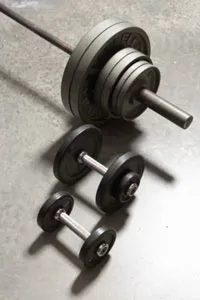
Strength training is not a marathon. It’s all about short, sharp bursts of power. Think weight lifting, yoga or calisthenics. These activities burn calories. Not as much as aerobic calisthenics. Here’s the real payoff: you’re building muscle.
Muscle tissue changes your body’s engine. More muscle mass means faster metabolism. Your body burns more calories even if you are sitting still. This is not just a theory. It’s biology.
The USDA has guidelines for this. But the basics are simple. You need to challenge your muscles. You have to let them recover.
Why you should lift weights
You might think that lifting weights is only for bodybuilders. It’s a myth. Moderate strength training builds strength and tone. It doesn’t make you big.
The advantages are obvious.
- Bone density increases. This fights osteoporosis.
- Joints get stronger. Less wear and tear over time.
- Balance improves. Fewer falls with age.
- Daily tasks become easier. Less fatigue when carrying groceries or climbing stairs.
- Posture improves. Standing taller feels natural.
- The back pain may subside. For some people, this is a relief.
- You look younger. Firm muscles replace sagging tissue.
But let’s clear up the common confusion. Spot reduction is a lie. You can’t tell your body to lose fat only from the stomach or thighs. Fat loss occurs systemically. You burn more calories than you eat. The fat comes off everywhere.
However, you can strengthen the underlying muscles. As the fat layer thins, defined muscles show through. You look slimmer. Not because the fat has left one spot, but because the underlying muscle is firmer.
How to get started without hurting yourself
You don’t need a fancy gym. Your body weight is a load. Push-ups. Squats. Leg raises. Crunches. Or use dumbbells. Resistance bands. Medicine balls. The machines also work.
Muscle cells adapt. They get stronger first. Then as you continue, they grow. However, remember that moderate training does not make you a powerlifter. It simply makes you functional.
Here’s how you structure it.
Frequency is important
Experts recommend strength training two to three days a week. Not every day.
Muscles need 48 hours to regenerate. Grow. You don’t grow up in the gym. They grow in the bed.
You can practice more often if you split your groups. upper body one day. Lower body the next. Just don’t hammer the same muscles back-to-back.
Breathe or pass out
It sounds obvious. But many people are holding their breath. Straining. Pushing.
Don’t do that.
Exhale as you lift. When you exert the most force. Breathe in as you lower the weight. When the muscles relax.
Why? Blood pressure rises when you hold your breath. It can cause dizziness. Or even worse. Keep the air moving.
How many repetitions?
A “repetition” is one complete movement. A “set” is a set of repetitions performed consecutively.
The gold standard for strength? Two sets of 10-12 repetitions.
Here’s the check:
* If you can’t do 10 reps, the weight is too heavy.
*If you easily get 15, it’s too light.
Find the sweet spot.
It varies depending on the calisthenics.
A bent-over row uses big muscles.
It can handle more weight than a bicep curl. The curl isolates one small group.
As you get stronger, you can increase the reps. Or add sets. But keep the pace slow. 4-6 seconds per repetition. Control the weight. Don’t drop it.
Rest Between Sets
If you do three sets of 12 lunges, do 12. Then stop.
Muscles need a break. 30-60 seconds is enough for this repetition range.
Don’t rush. Let the heart rate settle. Let the muscles reset. Then go again.
It’s not about exhaustion. It’s all about consistency. And proper form. Anything less just sets you up for injury.
Resistance bands: Versatile and portable
You don’t need a commercial gym to build strength. Portable equipment such as resistance bands offer an affordable entry point. They look like giant rubber bands, but they work as serious exercise equipment. You can buy them at sporting goods stores or make them yourself using surgical tubing. Tie a loop to both ends of the four-foot piece and you have a versatile set.
These bands target specific muscle groups with controlled tension. Consider the seated row. Sit down, wrap the band under your feet and hold the ends tightly. Pull back and bend your elbows to squeeze your shoulder blades together. Keep your shoulders down. Don’t let them creep up to your ears. This mimics the motion of a rowing a boat and strengthens the upper back.
Try a single leg press on your legs. Loop the band around one foot. Lift your leg slightly off the floor and bend the knee. Press your foot into the band and straighten your knee as if stepping on the gas pedal. Keep the leg suspended. Repeat until the set is done. It isolates the quads and glutes without heavy weights.
The overhead press emphasizes the triceps. Hold the tape in one hand. Raise the arm above the head and reaching toward the opposite shoulder blade. Place one hand behind your back to grasp the loose end of the band. Keep your lower arm anchored. Extend your upper arm to fully stretch the band. This targets the triceps and helps strengthen the back of the arm.
Seated arm curls work your biceps. Loop the band under your feet as you did in the row. Keep your elbows at your sides. Curl upward, palms facing the ceiling. Constant tension builds endurance and biceps size.
Bodyweight training: No equipment required
Your body provides enough resistance. This is the most convenient form of strength training. You can change the intensity by changing the leverage or angle.
Modified push-ups are the standard starting point. Rest on your knees to reduce the strain on your upper body. Try doing push-ups against the wall to gentler approach. Stand facing a wall, place your hands on it and lean forward. This develops chest and shoulder strength with minimal joint stress.
The legs react well to wall sitting and lunges. Slowly lower yourself into a sitting position, leaning against the wall. Hold the isometric contraction. Lunges are very effective for dynamic movements. They work the major muscle groups of the lower body.
This is how you execute a proper lunge. Stand tall. Place your right foot about three feet in front of your left. Keep your back straight. Place your free hand on your hip for balance. Lower your body slowly. Keep your weight evenly distributed. Make sure your right knee does not extend past your ankle. This protects the knee joint. Push back to standing position. Repeat four times on each side, then switch legs. You can gradually build up to 10-15 reps on each side.
Combine these with crunches and side leg raises. This routine covers the core and hips with no equipment.
Medicine Balls: Dynamic resistance
A medicine ball is a weighted ball usually made of synthetic rubber. It resembles a soccer ball filled with sand. Weights range from 2.2 pounds (1 kg) to about 18 pounds (8 kg). The device offers resistance throughout the range of motion and is therefore ideal for functional training.
It is especially useful for athletes. You can practice sport-specific movements and strengthen the muscles involved at the same time. The ball adds instability and forces the core to grip to maintain balance.
Exercises vary greatly. You can perform straight arm throws to develop explosive power. Torso twists target the obliques. Abdominal crunches and double-leg kicks work the core and legs. You can stand, sit or lie down while using it. A 30-minute session can target all major muscle groups.
It’s a good idea to check out books on strength conditioning with medicine balls. Proper technique is more important than the weight you lift. Incorrect form can cause strain, especially in the lower back area when turning or throwing.
The value of expert advice
The form determines the results. Poor technique provides little benefit and increases the risk of injury. A personal trainer can teach you proper alignment. You can design an individual program tailored to your goals. Even an hour-long session can correct bad habits and maximize efficiency.
If hiring a trainer is out of budget, fitness videos offer an alternative. They introduce movements and offer variety. Versatility guarantees exciting training and balanced development. However, the videos lack the corrective feedback provided by the human eye. You have to be disciplined to maintain proper form without supervision.
Strength training follows established guidelines. The USDA offers a solid introduction to the basics of strength training. Following these principles will help you build a safe and effective routine. Whether you use bands, body weights, or medicine balls, consistency is key.
Correct form is more important than the weight you lift.
The market for home exercise equipment is saturated. Decisions can be overwhelming. Start with what is available. Bands and body weight require minimal investment. Progress from there as your strength improves.
Medical Disclaimer: This content is for informational purposes only. It is not intended as medical advice. Neither the authors nor the publisher accept responsibility for the consequences of any treatment, procedure, practice or activity arising from this information. This is not a substitute for the advice of your doctor or healthcare provider. Ask for expert advice before starting a new training program.