


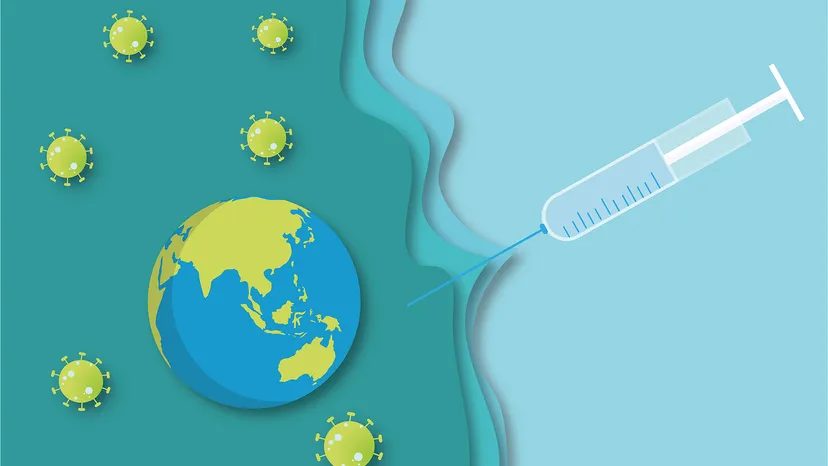
This could ultimately help narrow the glaring gap between who is protected from SARS-CoV-2 and who is not.
Two years after the pandemic, the numbers are astonishing. More than 314 million people have been infected. More than 5.5 million people died. About 60% of the world’s population has received at least one vaccination. However, access is still very uneven. Wealthy people now share boosters and a fourth vaccine to get the basic primary dose.
Viruses do not check passports. However, only about 72% of vaccine doses have gone to high- and upper-middle-income nations. This inequality is not just a moral failure. This is a biological threat. As long as the virus grows uncontrollably among unvaccinated people, new variants will emerge. Everyone is still at risk.
Enter CORBEVAX. The vaccine, developed by researchers who began working on the technology during the 2003 SARS outbreak, offers a different way forward. It is designed for global scale, not just profit.
The science behind protein subunit vaccines
How do they work? The goal of all COVID-19 vaccines is to teach the immune system to recognize the virus. They do this by targeting the spike protein, which is the key the virus uses to unlock human cells.
CORBEVAX is a protein subunit vaccine. It does not tell the cell to build the spike protein. It delivers the actual protein directly.
“CORBEVAX delivers the spike protein to the body directly.”
This is a key difference to mRNA vaccine products such as Pfizer and Moderna. These techniques provide genetic instructions. Johnson & Johnson’s viral vector vaccine also follows this guideline model.
CORBEVAX skips the middleman. It uses a harmless spike protein fragment to stimulate the immune system. As with other approved vaccines, two doses are required. But this simplicity is important.
From SARS to SARS-CoV-2
Baylor College of Medicine’s Maria Elena Bottazzi and Peter Hotez aren’t starting from scratch. They’ve been down this road before.
During the 2003 SARS outbreak, they produced a spike protein that added some genetic information to the yeast. Yeast produces large amounts of protein. They added an adjuvant, a substance that boosts the immune response. The vaccine is ready.
After that, the SARS epidemic gradually subsided. The need for it is gone.
When SARS-CoV-2 appeared in 2019, the team dusted off their design. They updated the spike protein sequence to match the new virus. They created CORBEVAX.
The vaccine was found to be safe in a large clinical trial in the United States. It is more than 90% effective in preventing symptomatic infections. It received emergency use authorization in India. Other developing countries are expected to follow suit.
The irony? The US and many western countries did not finance it. They raced toward newer technologies. mRNA vaccines have reached the public more quickly. Over the decades, however, subunit approaches have been refined. In some ways it is more advanced simply because it took longer to mature.
Why CORBEVAX is important for global access
Why focus on this vaccine now? Because logistics decide who gets saved.
The biggest advantage of protein subunit vaccines is scalability compared to mRNA vaccines. The technology behind CORBEVAX is proven recombinant DNA technology. Used for 40 years. The same approach also produces the Novavax COVID-19 vaccine and hepatitis B vaccine.
Manufacturing costs are lower. Millions of doses can be produced quickly.
Another hurdle facing mRNA vaccines is storage. Very low temperatures are often required for transport. CORBEVAX can be stored in a normal refrigerator. This facilitates distribution to remote and resource-poor areas.
mRNA vaccines are expensive. Complicated. They rely on highly trained employees. They are difficult to scale. CORBEVAX avoids many of these obstacles.
Developers are not interested in intellectual property rights. They are not looking for financial gain. The 7 million dollars needed for development were donated by benefactors. There is no major public funding. We do it to solve problems, not to make money.
Path ahead
Vaccine inequality perpetuates the pandemic. As long as billions of people remain unprotected, the virus will continue to evolve. It will find new ways to spread.
CORBEVAX offers a practical solution. It’s not a panacea. It is not the only vaccine needed. But this is a tool made for the poorest parts of the world. It is based on proven science. Respect the realities of the supply chain.
The question is whether the world’s medical infrastructure will accept it quickly enough. The science is ready. The need is urgent. Low costs.
We have all the tools. We have the knowledge. The rest is a matter of will. And right now, that will feels scarce.
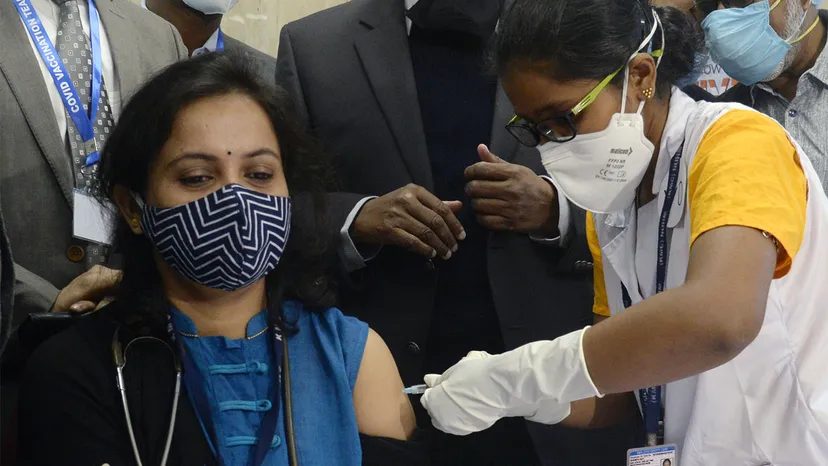

Access Economics: Why BioE’s Strategy Matters
CORBEVAX operates under a unique license. It is patent-free and licensed to Biological E. Limited (BioE). India’s largest vaccine manufacturer. The plan is aggressive. BioE’s goal is to produce at least 100 million doses of the vaccine every month starting in February 2022.
It’s not just about quantity. It’s about accessibility. The patent-free model allows other low- and middle-income countries to produce vaccines locally. The result? A product that is cheap. It is very stable. Increasing production is relatively easy.
Together, these factors make CORBEVAX one of the most affordable vaccines on the market.
How effective is it against new variants?
Efficacy data are incomplete. Researchers are still investigating how well CORBEVAX works against the Omicron variant. Early signs suggest that protection is in place, but the full picture is unclear.
This uncertainty should not obscure its wider utility. The CORBEVAX story provides a blueprint. It shows how vaccine inequality can be addressed. This model could also be applied to COVID-19 and future diseases.
Why global access is still broken
We know why vaccine distribution has been so uneven. Wealthy governments buy up front. They secured their supply chain early. This leaves less for others.
Developing countries have the capacity to produce vaccines. But capacity is not the same as access. African, Asian and Latin American countries often cannot afford to place large orders. The cost barrier is real.
The numbers highlight the difference. The Indian government has ordered 300 million doses of CORBEVAX. BioE plans to manufacture more than a billion doses of the vaccine for developing countries.
Comparison with the G7 countries. They have promised to donate more than 1.3 billion doses of the vaccine. Only 591 million units have been shipped so far. If BioE achieves its goal, this single vaccine will reach more people than the richest countries combined.
The Variant Problem
The Omicron variant was a painful lesson. It spreads quickly. It occurs in people who have not been vaccinated. As long as global vaccination rates remain low, new variants will continue to emerge.
Booster shots alone will not end the pandemic. They control the spread. They do not stop the mutation engine.
Developing a workable vaccine like CORBEVAX is a necessary first step. This is not a silver bullet. But this is how we vaccinate the world. Without it, the pandemic will continue.
*Maureen Ferran is an assistant professor of biology at the Rochester Institute of Technology. She receives funding from the National Institutes of Health. *
*This article is republished from The Conversation under a Creative Commons license. *


