SpaceX Needs This Rocket To Justify Its Trillions
SpaceX filed its IPO on Wednesday. You heard it. The long wait is over. Expect me to ramble about lunar mass drivers and putting gigawatts of data centers in space over the next few weeks. It’s the sci-fi stuff. Headline fodder.
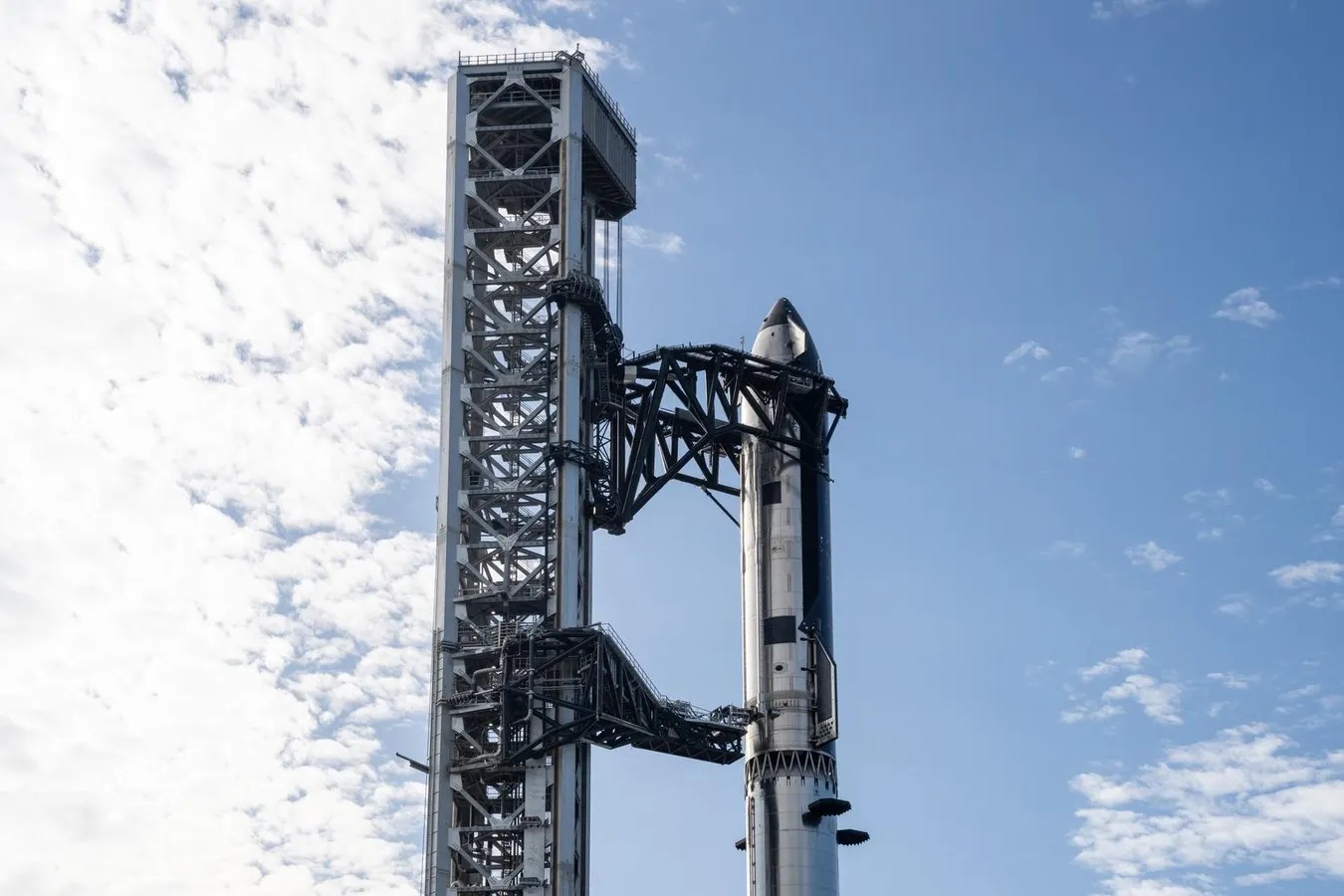
But while everyone gawked at the prospectus, a rocket sits in Texas. It is called Starship. I meant to write about its latest test this week. Delays happened. It’s going up shortly after this goes out, in theory.
Starship isn’t just a big rocket. It is the only reason anyone is taking these valuations seriously. It’s bigger than Saturn V. Fully reusable. SpaceX has thrown more than $15 billion into its development according to public filings. That money bought the potential, not the proof.
Starship is the lynchpin. The next Starlink satellites are too fat for existing boosters. They need Starship. The proposed orbital data centers? Starship. Carrying astronauts back to the Moon for NASA? You guessed it. Without this vehicle, the trillion-dollar valuation is a mirage. Current revenue sits at $18 billion, nearly half of it burned in losses. The market is buying the promise of the heavy-lift workhorse, not the current P&L.
The schedule is years late. Tests have ended in rapid unscheduled disassembly, as SpaceX likes to politely call explosions. Recent flights are better. Progress is happening, but barely.
With the stock listing days away, eyes are on this flight. The prospectus is clear, printed in bold, about the risk. Any failure or delay limits growth strategy. Period. If Starship coughs, the dream of next-gen satellites, global connectivity, and orbital AI compute stumbles.
Curved Origami: Flat Is Out
Carrying materials is annoying. Whether for camping or building habitats on Mars. Lightweight means weak. Flexible means hard to shape into smooth, strong curves. Most portable structures end up looking jagged and ugly.
Researchers at McGill University have a workaround. A new paper details materials that mix cable folding with origami style. Inside the flat sheet are cables. You tighten them, and the soft material turns rigid. You loosen them, and it collapses back down.
“Our approach opens new avenues for the design ofdeployable and adaptive load-bearing curvedstructures,” says co-author Damian Pasini.
Applications? Emergency shelters. Space habitats. Even medical implants. It is simple geometry meeting advanced material science.
Longevity Gets More Money, Sam Style
Retro Biosciences just closed a funding round. Sam Altman backed them. They hit a $1.8 billion valuation. 4P Capital led the deal. The actual dollar amount isn’t out yet, but the prestige is high.
The goal is explicit. Add 10 years to healthy human life span. They already have one drug in trials. It targets autophagy. The process where the body cleans out damaged cells. Autophagy slows with age. This drug wants to speed it up again. From concept to human test, they did it in 15 months.
Two more pipelines are coming. A cellular therapy for Alzheimer’s replacing old brain microglia, targeting trials in 2026. Another replaces missing blood stem cells in partnership with the Murdoch Institute, hitting clinics in 2027.
CEO Joe Betts-LaCroix says existing programs are fully funded. This cash? It’s for discovery. Hunting for new problems in aging to tackle next.
“Ther’s a bunch of things we wantto workon,” he says.
Data Is The Missing Link In Biological AI
I asked investors what’s overhyped. Jory Bell of Playground Global didn’t hesitate.
Generative AI for binder design in drugs is necessary. Not sufficient. He thinks people believe AI alone moves the needle in medicine. It doesn’t. If you don’t go deeper, you hit Amdahl’s Law and fall back to artisanal methods. Manual. Slow. Expensive.
Where should we look instead? Biology. It fits AI perfectly. But people underestimate the data needs. They are too complacent. AlphaFold worked because it had 170,00 data points from the protein database. A small number, relatively. It solved a white whale.
Now we need orders of magnitude more. The hype machine screams “cure all diseases!” It’s closer than people think. But the data input problem? That’s farther away than they admit.
Frontier labs talk biology as the next big thing after coding. They don’t understand the data grind yet. Companies like Manifold in the Playground portfolio are trying to educate them. You cannot industrialize biology without industrializing the data collection first.
Bell predicts that in five years, true bio-AI hybrids will emerge. The Genentechs of the 21st century. Created in this decade.
The Weekly Scan
- NASA Shakeup : Jared Isaacman says China will try a crewed lunar flyby next year. Like Artemis II but PRC. NASA is also consolidating departments internally. Boring but significant.
- AI Tools For Scientists : Google launched new Gemini tools for research. Meanwhile, an OpenAI model allegedly disproved a geometry conjecture by Paul Erdős. Interesting times for math.
- Fake Citities Ban : ArXiv will ban papers using AI hallucinated citations. The legal profession might follow soon. Lawyers love making up sources.
- Waymo Trouble : Self-driving cars are getting suspended from some freeway services. Some drove into construction zones. Or flooded roads. Sensors miss the obvious.
- Quantum Cash : Federal grants total $2 billion for quantum research. You pay with equity though. Not cash. The government is buying in.
Entertainment
I binged Netflix’s Department Q. Now I’m reading the source material. The Keeper of Lost Causes by Jussi Adler-Olsen.
Why the wait? Library queue. People like crime fiction.
Comparing the two is fun. The show changed the setting and key details. Faithful to the spirit, mostly. The book stands on its own merit.
Forbes links for billionaires and athlete earnings are in the original, but frankly, I’d rather discuss rocket science.