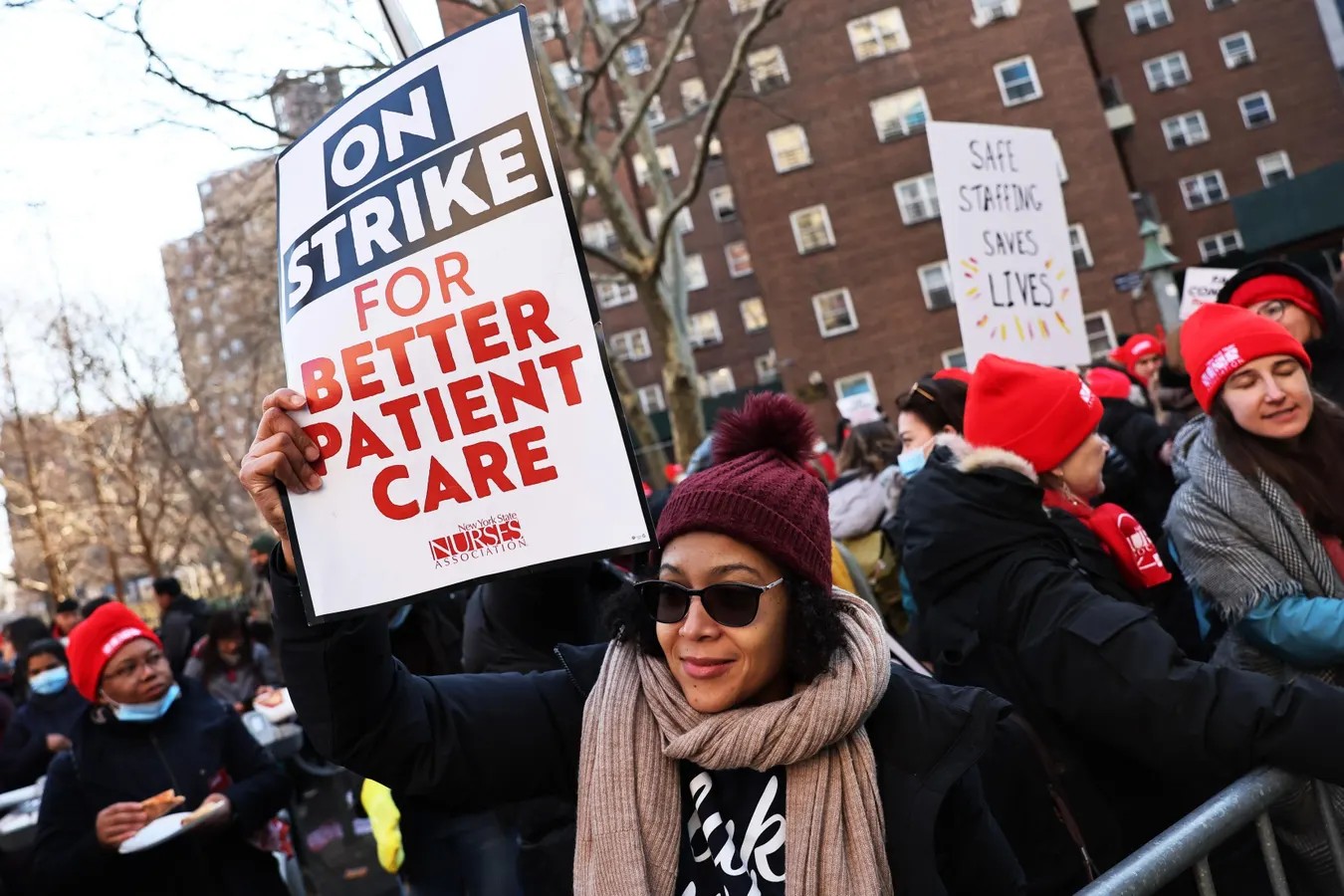
The largest nurses’ strike in New York City history continues into its tenth day with no immediate resolution in sight, as nearly 15,000 workers at New York-Presbyterian, Mount Sinai, and Montefiore Medical Center demand improved staffing levels, higher wages, and better security measures. This action highlights a broader crisis in healthcare worker conditions, exacerbated by rising patient violence – including recent threats of gun violence against staff – and systemic understaffing.
The New York State Nurses Association’s contract expired on December 31, and while Mayor Zohran Mamdani has voiced support for the striking nurses, emphasizing the industry’s financial capacity, the hospitals have already spent over $100 million on temporary replacements and lodging. This expenditure underscores the financial pressure hospitals face while simultaneously resisting worker demands.
The strike coincides with a surge in flu cases driven by a new viral subclade, and is further complicated by recent federal healthcare subsidy cuts to New York. These combined factors—labor disputes, public health emergencies, and financial constraints—create a volatile situation for both patients and healthcare providers. A similar strike in 2023 lasted three days, but the current dispute appears entrenched, with no new negotiations scheduled.
Meanwhile, a potential strike looms in California, where 31,000 Kaiser Permanente workers are threatening action if their contract isn’t renegotiated. This escalation suggests a growing trend of labor unrest in healthcare, driven by demands for better working conditions and fair compensation.
AI and Healthcare Innovation
Amidst the labor tensions, developments in artificial intelligence are reshaping the industry. Yann LeCun, former chief AI scientist at Meta, has launched Advanced Machine Intelligence Labs, aiming to build advanced “world models” for AI applications – with a strong focus on healthcare. The company’s partnership with Nabla, a health tech startup specializing in AI-powered doctor visit transcriptions, signals a shift towards leveraging AI for improved diagnostic accuracy and efficiency.
Epic, a leading medical records provider, is also rolling out new predictive tools called ‘Curiosity,’ trained on over 100 billion patient events. These tools aim to improve both clinical decision-making and hospital operations, such as predicting patient discharge dates to optimize bed management. The increasing use of predictive analytics raises questions about data privacy and algorithmic bias, though Epic insists its focus is on accelerating quality care.
Funding Trends and Industry News
Zarminali Pediatrics recently secured $110 million in funding to expand its tech-driven pediatric care model, reflecting investor confidence in digital health solutions. Meanwhile, mergers and acquisitions continue to reshape the pharmaceutical landscape, with GSK acquiring Rapt Therapeutics for $2.2 billion to bolster its allergy treatment pipeline.
Recent controversies include questions over medical privacy risks highlighted in a new lawsuit against Epic, and the removal of webpages from the Department of Health and Human Services questioning the danger of cellphones under the RFK Jr. administration.
The healthcare sector remains in flux, balancing labor disputes, technological innovation, and shifting regulatory landscapes. The long-term impact of these trends will depend on how stakeholders navigate the converging pressures of financial constraints, worker demands, and rapid technological advancements.