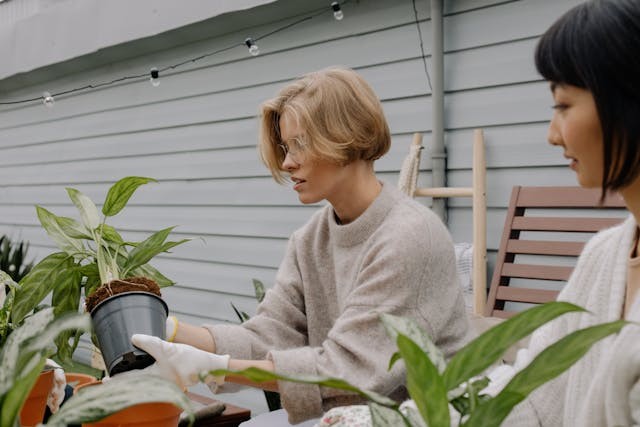
Your house is a machine. It is built for efficiency, for speed, for getting you out the door on time. But the space outside? That shouldn’t be another checklist. It should be a place where you can actually stop.
The Noise Outside Your Window
Life moves too fast. You feel it. The phone buzzing in your pocket creates a low-level panic, a constant demand for your attention. Indoors, we live under artificial light, trapped in loops of emails and deadlines. Step outside, and the air changes. The light is different, unfiltered, real.
Even five minutes of this can reset your brain. It’s not magic. It’s biology.
Why Green Feels Like Breathing
Trees. Grass. Flowers. These things don’t care about your Q3 projections. Studies show they lower stress. Green isn’t just a color here, it’s a signal for safety. It tells your nervous system to chill.
A single pot helps, sure. But a proper garden immerses you. It pulls you in. Of course, plants need water. Don’t forget the logistics. Rain tanks exist for a reason, save that water before the sun beats it all away.
Designing for Stillness, Not Instagram
Most people build gardens to look at, not to live in. Clean lines, symmetrical hedges, perfect lawns. It’s visually loud. It doesn’t feel like rest. It feels like a showroom.
A slow garden prioritizes feeling over looking. Think about privacy first, hide the view if the street is ugly. Use soft edges, tall bushes that block the noise, not just the eyes. Layer your plants so you have texture at your feet and in the sky. Stick to wood and stone, materials that age without pretending to be new. Curved paths force you to walk slower. A straight line gets you to point B too quickly.
“A slower garden prioritizes experience over perfect.”
Breaking It Up
Don’t make one big, empty field. Create little worlds inside your yard.
- A shaded corner for reading. Just one.
- A sunny patch where the light hits your coffee just right in the morning.
- A wild spot you barely touch, let the weeds do what they do.
- Fragrance. Plant things that smell good, lavender, rosemary, anything that hits you before you even see it.
Each spot demands something different. This changes how you move through your own land. You aren’t just walking to the back door. You are wandering.
Listen to the Leaves
Vision is only half of it. Close your eyes for a second. What do you hear? Wind in the leaves, a fountain trickling, a bird arguing with its reflection. These sounds ground you. Movement matters too, but slow movement. Grass swaying. Shadows creeping across the pavement. Time passes, but it doesn’t rush.
Let It Be Messy
Here is the trap: maintenance. If your garden feels like a second job, you are doing it wrong. Stress does not cure stress.
Let it go wild. Accept the chaos of growth. Seasons change, plants die back, some things run amok. Good. It feels alive because it isn’t controlled by a manicured hand. It feels authentic.
What Do You Actually Want?
Forget what your neighbor has. Do you want minimalism? A stark, zen-like void? Or a jungle? Ask yourself when you use the space. Morning or evening? Do you crave openness or a box-like enclosure? Design around your mood, not the catalog.
Size doesn’t matter. A balcony, a patch of dirt, acres of forest. The scale is irrelevant if the space works. All it needs to do is pull you out of the noise.
Out of the machine. Into the air.
Isn’t that what we are looking for?
Or are we too busy to sit down?