A virus once considered a niche problem for the aquaculture industry has crossed the species barrier, emerging as a cause of a serious new eye disease in humans. Covert mortality nodavirus (CMNV), which has long plagued shrimp and fish farmers, is now linked to a condition known as persistent ocular hypertensive viral anterior uveitis (POH-VAU).
This discovery marks a significant shift in our understanding of CMNV, moving it from a purely veterinary concern to a documented zoonotic threat.
The Discovery: Beyond Circumstantial Evidence
For years, international health organizations, including the World Organisation for Animal Health (WOAH), maintained that CMNV posed no risk to humans. However, a recent study published in Nature Microbiology has overturned this consensus.
Researchers from the Chinese Academy of Fishery Sciences and Shandong First Medical University provided definitive evidence of the virus’s presence in humans through several key findings:
– Physical Presence: Electron microscopy and proteomics confirmed viral particles physically located within the iris tissue of affected patients.
– Immune Response: All 70 patients in the clinical study tested positive for antibodies against the virus.
– Animal Modeling: In controlled experiments, mice injected with CMNV developed the same symptoms seen in humans, including inflammation and elevated intraocular pressure.
Understanding POH-VAU: Symptoms and Severity
POH-VAU is a severe inflammatory condition that targets the eye. It is characterized by:
– Keratic precipitates: Clumps of inflammatory debris on the inner cornea.
– Iris atrophy: The wasting away of iris tissue.
– High intraocular pressure: Dangerous spikes in eye pressure that can lead to permanent damage.
The disease is notoriously difficult to manage. It is recurrent, often resists standard medical treatments, and can lead to surgical intervention. In the study, approximately one-third of patients required glaucoma surgery, and one participant suffered permanent vision loss.
How the Virus Spreads: Exposure and Transmission
The study identified a clear link between contact with aquatic animals and the onset of the disease. Most affected patients were between 45 and 70 years old, with the primary risk factor being frequent, severe exposure to aquatic animals in the two years preceding the disease.
The modes of exposure include:
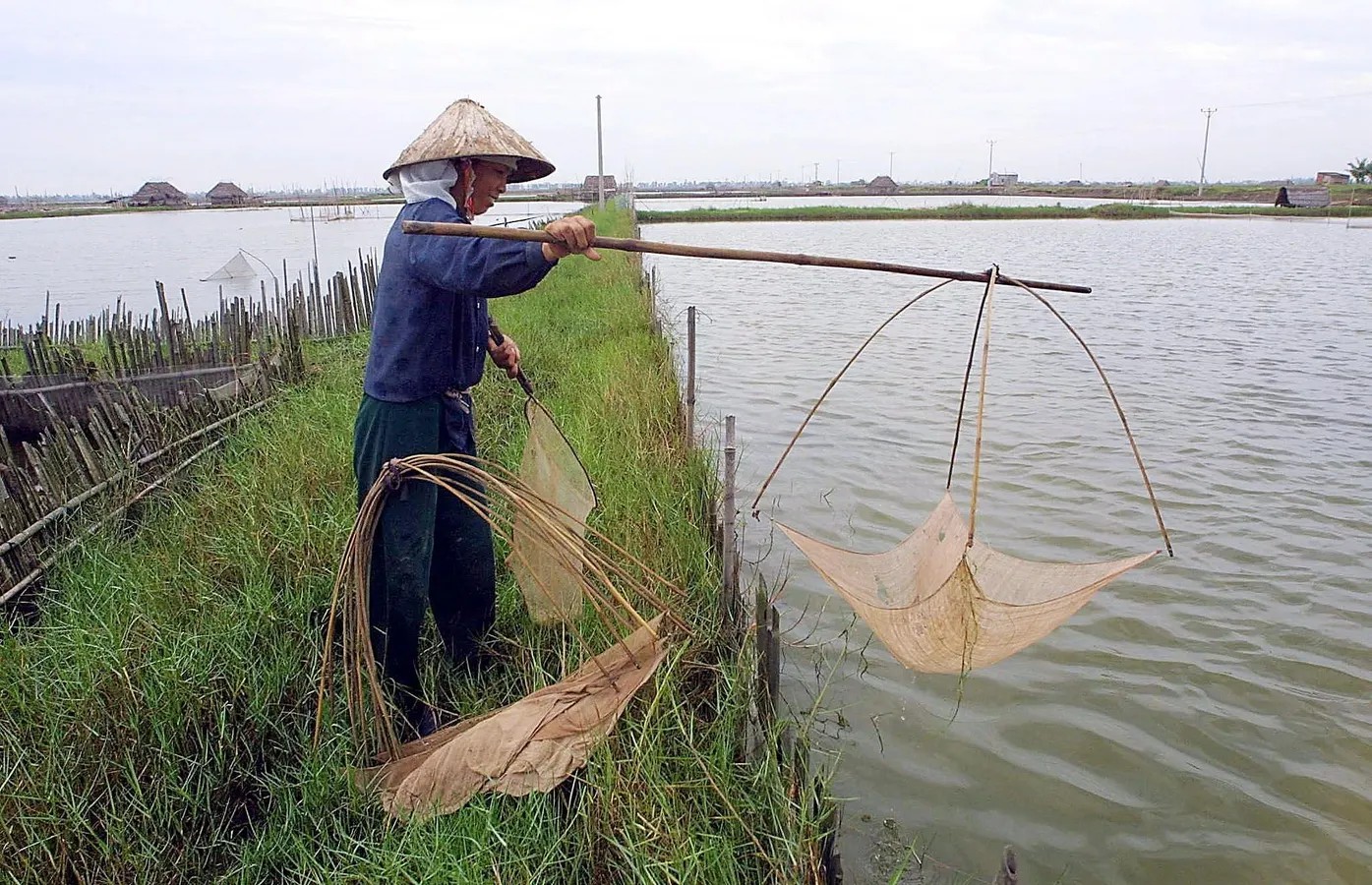
– Direct Handling: Over half of the patients handled seafood bare-handed at home.
– Consumption: Roughly 17% of patients consumed raw or undercooked aquatic products.
– Potential Human-to-Human Transmission: Notably, 16% of patients were “close contacts” of high-risk individuals rather than direct handlers themselves. This suggests the virus may be capable of spreading between humans, though this requires further investigation.
A Global Presence in the Seafood Supply Chain
CMNV is an incredibly resilient and widespread virus. It is a single-stranded RNA virus with an unusually broad host range, capable of infecting species across seven different phyla.
The prevalence of the virus in the global food supply is concerning:
– In Asia: 35% of shrimp and 40% of fish samples tested positive.
– In China: Market testing showed infection rates between 33% and 62% across various seafood products.
– Global Reach: The virus has been detected in specimens from the Americas, Africa, and even Antarctica.
The Growing Risk of Aquaculture Expansion
The emergence of POH-VAU is closely tied to the growth of the global aquaculture industry. As seafood production expands—particularly in the Global South—the frequency of human contact with infected animals increases.
While cooking seafood likely neutralizes the virus, the primary risk remains with those who process aquatic animals for a living. For these workers, the threat is not through ingestion, but through direct, unprotected contact with contaminated environments and animals.
The correlation between rising aquaculture production and POH-VAU rates suggests that as the industry grows, so does the opportunity for viral spillover.
Conclusion: The identification of CMNV as a cause of POH-VAU highlights a critical gap in zoonotic monitoring. As global seafood production increases, protecting workers and consumers from this emerging viral threat will require enhanced biosecurity and better awareness of transmission risks.