


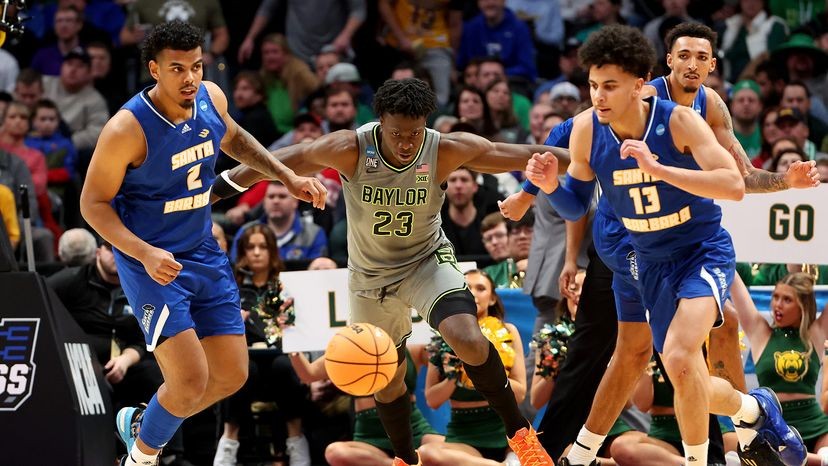
The second week of March usually brings a specific kind of chaos to American sports. It’s not just a season; it’s a cultural event. March Madness. That’s the name given to the NCAA’s Men’s and Women’s Basketball tournaments. For fans, it’s the only time that matters. The stakes are absolute. One bad night and your year is over.
The men’s and women’s tournaments are deeply embedded in the national psyche. Millions of fans tune in, checking brackets, filling out office pools, and losing sleep over seedings. It’s single-elimination. There are no safety nets. To win the title, a team must survive at least six consecutive victories. That’s a brutal filter. You lose once, you go home. The pressure is suffocating.
This structure creates the nickname. “Madness” isn’t just hype. It’s the result of 68 men’s teams and 64 women’s teams fighting for the biggest prize in college basketball. You get buzzer-beaters. You get upsets where a 16-seed knocks out a 1-seed. You get the kind of Cinderella stories that define the era. It’s the euphoria of advancing mixed with the agony of immediate elimination.
We are breaking down exactly how the NCAA Basketball Tournament bracket works. How do teams get in? How are they ranked? What determines the champion? Let’s start with the basics of college athletics.
The Structure of the Madness
The tournament is a brutal, beautiful test of survival. The format is simple but unforgiving. Single elimination. No second chances. The championship team has to win six games in a row. For the women, it’s similar, though the field is slightly smaller. The intensity doesn’t scale down.
This is where the term “March Madness” comes from. It’s not just a marketing slogan. It’s a description of the emotional whiplash. You watch a favorite team dominate for 35 minutes, only to lose in the final seconds. Or you witness a mid-major program dismantle a blue blood. That unpredictability is the point. It’s why people watch.
The bracket is the map. It determines who plays whom. It dictates the path to the final four. Getting it right is hard. Getting it wrong is painful. We’ll look at how the selection process for the NCAA tournament works next. How do 68 teams get chosen? What metrics matter? And how do the seeds decide who gets the easier path?
The answer lies in a committee that meets in secrecy. They review stats. They watch games. They argue. Then they release the bracket. The world reacts. The madness begins.
The NCAA runs the show. One entity oversees the 1,098 voluntary member schools. Representatives from those schools help write the rules. The national office in Indianapolis handles the championships, including the chaos of March Madness.
It’s not a monolith. The association splits its members into three divisions. The split depends on school size. It depends on athletic budgets. It depends on how competitive the programs are. Each division has its own rulebook.
Division I: The Money and the Spotlight
Division I is where the attention is. It’s the most prominent division. It gets the most publicity. The schools here are usually the biggest. Their budgets reflect that scale. Often, lucrative media contracts drive the money.
There are about 350 schools in this bracket. Duke and UCLA are in the mix. The University of Kentucky plays here too.
The rules are strict. Schools must sponsor at least seven sports for men and women combined. Or six for men and eight for women. Two of those must be team sports for each gender.
Basketball rules get specific. Men’s and women’s teams must play all but two of their games against other Division I schools. Men’s basketball must play a third of its contests in its designated home arena.
Scholarships have limits. There is a minimum and maximum number of scholarships a school can award.
Division II: The Regional Focus
Division II has 310 schools. Most have enrollments under 8,000 students. Lynn University in Florida is a prime example.
The athletic requirements are lighter. Schools must sponsor at least five sports for men and women. Or four for men and six for women. Again, two team sports per gender.
Basketball teams must play at least half their games against Division I or II schools. There are no minimum home game requirements here.
Scholarships are partial. Student-athletes often split their aid. The focus is regional. Travel is minimized. Less time on the road means less time missed in class.
Division III: Academics First
Division III is the largest division. It has more than 438 schools. Johns Hopkins and Emory are in the group.
The key difference? No athletic scholarships. None.
The sports requirements mirror Division II. At least five sports for men and women. Or four for men and six for women. Two team sports per gender.
Seasons are shorter. Why? To allow more time for academics. The priority is clear.
The Tournament Focus
The Division I Men’s and Women’s Basketball tournaments are the big ones. The format is the same for both. This article focuses on the Division I tournament.
The Source of March Madness
The term “March Madness” is iconic. But where did it come from? It didn’t start with the NCAA. The phrase was used to describe the Illinois High School Association’s basketball tournament in the 1930s. Henry V. Porter, a teacher and sportswriter, is often credited with popularizing it for high school basketball.
The NCAA didn’t use the term for decades. The tournament itself began in 1939. It started as an eight-team field. The format has expanded since then. The modern tournament includes 68 teams. That’s a far cry from the original bracket.
The name stuck to the NCAA tournament in the 1980s. A movie titled March Madness helped cement the term in pop culture. But the roots are in state-level competitions. The energy of the college game borrowed the hype from the high school level.
The NCAA tournament has grown in prestige. It’s a single-elimination event. One loss, and you’re out. That’s the thrill. And the heartbreak. The structure is simple. The stakes are enormous.
It feels like the term has always belonged to college basketball. You hear it in April and you think of brackets, upsets, and the chaos of the NCAA Tournament. But that wasn’t always the case. Before it became the defining phrase for Division I madness, “March Madness” belonged to high school hoops in Illinois.
Coach and educator Henry V. Porter first dropped the phrase in a 1939 essay for the Illinois Interscholastic magazine. He titled the piece “March Madness,” capturing the specific fever that gripped the state’s student body and fans during the annual Illinois High School Association tournament.
Porter didn’t just use the words for flair. He described a psychological shift. In his essay, he wrote about the typical fan who is “sane and serious” during the rest of the year, just trying to pay taxes and get by. But when the tournament rolls around, that person undergoes a transformation.
“In everyday life he is a sane and serious individual trying to earn enough to pay his taxes. But he does a Jekyll-Hyde act when the spell is on him … The thud of the ball on the floor, the slap of hands on leather, the swish of the net are music in his ears … He is biased, noisy, fidgety, boastful and unreasonable — but we love him for his imperfections … The writer’s temperature is rising. The thing is catching. It’s got me! Gimme that playing schedule!”
That raw energy resonated. Illinois sportswriters picked up the term immediately. It became the standard label throughout the “Golden Age” of Illinois high school basketball in the 1940s and 1950s. For decades, it was a regional term, tied to the intense, community-driven tournaments that defined Midwestern winter sports culture.
The leap to the national stage was slow. The NCAA Tournament didn’t adopt the nickname until 1982. That’s when Brent Musburger, then a reporter for CBS, used the phrase during a telecast of a tournament game. Musburger didn’t invent the term himself. He credited an auto dealer from Chicago who worked as an announcer for the local high school tournament. The dealer used “March Madness” to describe the local frenzy, and Musburger, hearing it repeatedly, brought it to millions of viewers watching the college games.
Once it hit the airwaves, the term stuck. College basketball fans and media outlets embraced it, and it became synonymous with the national championship bracket.
Ownership of the term wasn’t guaranteed, though. It required a legal battle. Today, March Madness is co-owned by both the NCAA and the IHSA through the March Madness Athletic Association. The name that started in a small Indiana magazine essay now belongs to two of the biggest organizations in American sports.
Tickets to the Big Dance
The path from a local high school gym to the biggest stage in college basketball is paved with these historical shifts. Understanding where the name came from changes how you view the current tournament. It’s not just about the athletes. It’s about a century of fan obsession that started long before the TV deals and the billion-dollar brackets.
The term survived because it captured something true. It’s not about the sport itself. It’s about the reaction to the sport. The noise
Thirty-five hundred Division I coaches start every season with the same goal. Win it all. But the path to the trophy is narrow. For men, only 68 of 350 teams get in. For women, 64 of 348. The rest go home.
The gatekeepers are the selection committees. They meet in secret. Usually a hotel somewhere. They shut the doors. No phones. No press. Just athletic directors and conference commissioners staring at data. They decide who gets the invite and who gets the heartbreak.
The Bubble and the NET
You hear the term bubble teams all the time. It’s the most stressful part of March. These are the squads on the edge. One loss sends them packing. One win keeps them dreaming.
Thirty-two spots are automatic. Win your conference tournament. You’re in. Simple. The remaining slots? That’s where it gets messy.
For men, the committee looks at the NET. The NCAA Evaluation Tool. It replaced the RPI. It cares about game results. It cares about who you played. It cares about where you played. Offense matters. Defense matters. But scoring margin? That’s capped at 10 points. You can’t just run up the score in a blowout to help your ranking.
Women’s basketball is different. They still use the RPI. It’s a math problem. Twenty-five percent is your own winning percentage. Fifty percent is the average winning percentage of the teams you beat or lost to. Another twenty-five percent is the record of those opponents’ opponents. It’s a chain reaction of success.
No appeals. The decision is final. If you miss out, you look at the NIT. The National Invitation Tournament. It’s not run by the NCAA. For men, it’s 32 teams. For women, it’s 64. A consolation prize for the nearly-there.
Seeds and Pods
The field is split into four regions. Sixteen to eighteen teams per region. Each team gets a number. One through eighteen. The best team in the region gets the one seed.
This is where the gardening metaphors start.
Seeds are your placement. Pods are where you play. The committee groups seeds together. They want to keep geographic rivals apart. They want to save the best matchups for later. But they also want to save travel money. So they cluster teams. A pod is a group of teams playing at one site.
Who Makes the Deep Run?
Higher seeds usually win. It’s simple math. Better teams get better seeds. But March is chaos.
Low seeds are the Cinderellas. They’re the longshots. The dark horses. They surprise everyone. Then reality hits. Most of them get knocked out before the Final Four.
But not always.
Look at the men’s history. VCU. An eleven seed in 2011. They went all the way. Wichita State in 2013. Nine seed. Final Four. Syracuse in 2016. Ten seed. Made it deep. Loyola Chicago in 2018. Eleven seed. They shocked the world.
Then there’s the borderline cases. Butler. Eight seed in 2011. Final Four. South Carolina in 2017. Seven seed. They did what nobody expected.
It’s why we watch. We want to see the underdog. We want to see the eleven seed beat the two. We want the chariot to stay a chariot.
The tournament has grown. Men’s started small. Eight teams in 1939. Sixty-four in 1985. Sixty-eight in 2011. The last eight play for four spots in the real bracket.
Women’s started in 1982. Thirty-two teams. Forty-eight in 1989. Sixty-four in 1994. It’s stable now. Sixty-four teams. But the drama hasn’t changed.
You pick your brackets. You hope for a miracle. Then the first game tips off. And anything can happen.
How Seedings and Sites Actually Work
The selection committee doesn’t just hand out seeds and forget about logistics. It places the top four teams in each region into a first- or second-round site that makes geographical sense for them. Geography wins out over bracket alignment. So a second-seed from an Eastern state might play its opening rounds in the East. Then it travels to the West Regional for the next step.
Think of a Regional as a tournament within a tournament. The four winners from each of those four Regions earn a ticket to the Final Four.
There are eight host cities for those early rounds. Each city hosts two pods. A pod is a group of four teams. Since there are four Regions, you get sixteen pods total across eight sites.
Teams rotate venues weekly. The Final Four moves to a new city every year. Usually, it settles in a big metropolitan area with the stadium space to handle the crowd.
It sounds like a maze. But the core mechanic is simple. Subtract teams. Keep subtracting. Until one remains. That team is the champion.
March Madness Schedule and Structure
The men’s tournament runs for three weeks. It usually kicks off on the third Thursday in March. The action starts with the “First Four.” These are the four lowest-seeded teams battling for spots in the top 64. The women’s tournament skips this step. No extra teams. No opening round.
The first two days cut the field from 64 to 32. The next two days trim it to 16. This is the Sweet 16.
Then there’s a four-day break. Play resumes the following Thursday. By the end of the second week, the field shrinks from 16 to 8 (the Elite Eight ) and then down to four. Those four teams form the Final Four.
The third week happens in April. The survivors of March’s chaos play for the crown of college basketball.
The Bracket Culture and UConn’s Reign
Fans fill out brackets to predict the order. All the way to the winner. Some people put real money on the line. In 2023, Challenger, Grey and Christmas estimated office workers lost $17.3 billion in productivity. That’s just from time spent filling out forms and watching games.
The NCAA allows bracket contests. But only if there’s no entry fee. Which makes it technically legal. Practically speaking, it kills the whole point.
You can find printable brackets with dates and locations at NCAAsports.com.
Go Huskies.
The University of Connecticut dominates women’s college basketball. They have won the championship 11 times. They won four times in a row from 2013 to 2016. Their streak of 111 consecutive wins is the longest in any college sport. History books haven’t seen anything like it yet.
The Final Four is not just a branding exercise for college basketball. It is the semifinal round of the Division I Men’s or Women’s Basketball Tournament. Four teams remain. Two games are played. The winners advance to the national title game.
This term belongs exclusively to the NCAA. You won’t hear it in the NBA or NFL. If you watch the tournament, you hear it constantly. CBS uses the phrase “Road to the Final Four” in its broadcast graphics. The network has held major broadcasting rights since 1982. Turner Sports joined the mix in 2010 via a joint contract. The synergy is tight. The exposure is massive.
Reaching this stage is a specific athletic achievement. A team must win four consecutive games to get here. They need two more to claim the championship. The psychological weight is heavy. Coaches and players already picture the banner hanging in their home arena. This is a standard tradition in college sports. It represents years of funding, scouting, and recruiting.
The timing is precise. The men’s semifinals fall on the first Saturday in April. The women’s semifinals follow on the first Sunday. The championship games are played on Monday. The calendar is packed. The pressure is suffocating. It is still March Madness, just delayed by a few weeks.
Money drives the engine. In 2022, the NCAA reported $1.14 billion in revenue. One billion of that came from March Madness. TV contracts are the primary source. The distribution formula is complex. Shares are based on team performance, scholarships awarded, and other metrics. The NCAA requires conferences to distribute funds equally among member schools. This helps smaller programs survive. Many schools do not profit from basketball. They break even at best. Conference money covers operational costs. Smaller conferences keep more of the payout to manage their own expenses.
There is a caveat regarding player compensation. A 2021 rule change allows athletes to monetize their names, images, and likenesses. They can appear in commercials. They cannot receive a salary for playing. The line between endorsement and payment is thin. It is still evolving.
Who Dominates the Tournament?
UCLA holds the record for most men’s basketball titles. They have won 11 championships. Kentucky is second with eight. North Carolina follows with six. These numbers define a dynasty.
Longevity is a different metric. Harvard holds the longest drought between tournament appearances. It spanned 66 years. The gap was from 1946 to 2012. Other schools have long absences too. Dartmouth. Yale. Bowling Green. Tennessee Tech. Some have been waiting over 55 years. The gap widens for some. The tension builds for others.
The structure of the tournament ensures that every game matters. The path to the trophy is narrow. The financial stakes are high. The history is deep. The next round begins soon.